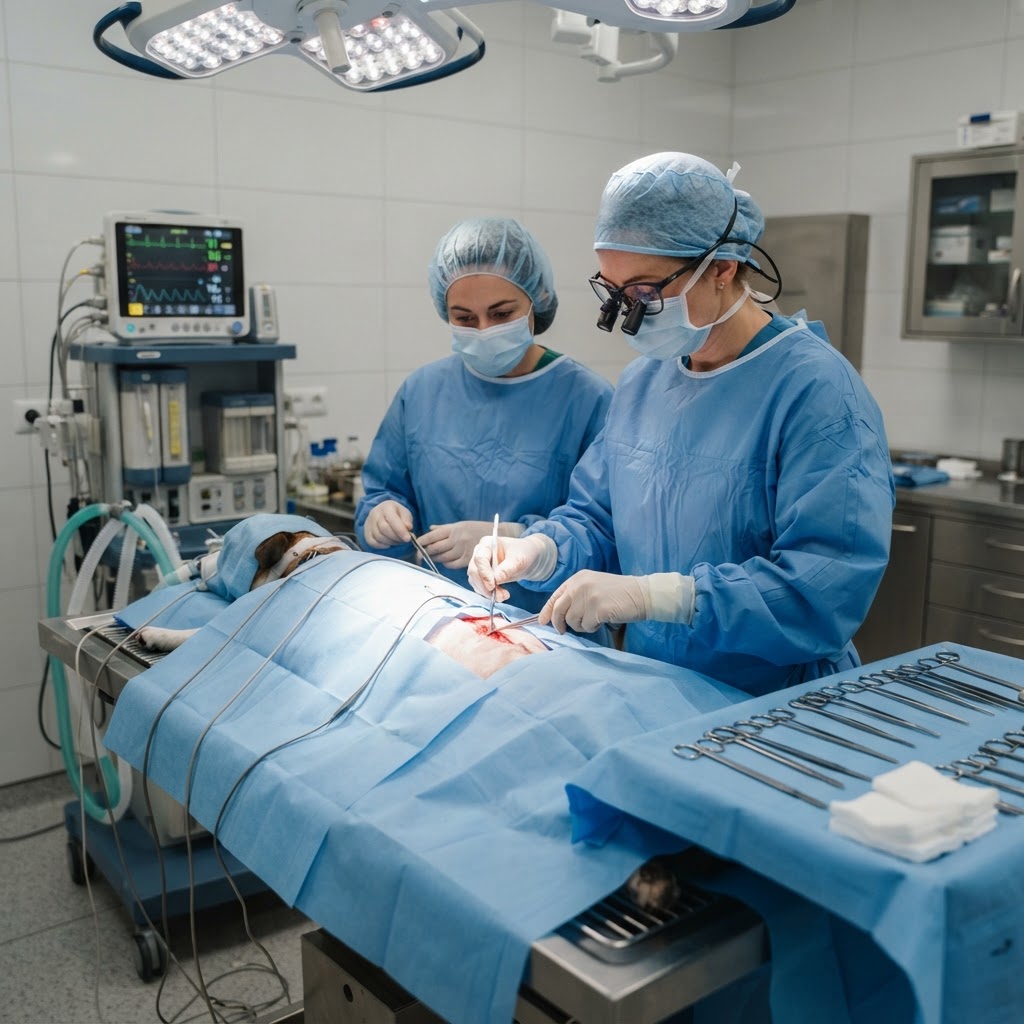
Bladder stones in cats are less common than in dogs but can be equally dangerous — especially in male cats, where stones can block the urethra and become life-threatening within hours. Surgery (cystotomy) is the primary treatment for stones that can't be dissolved with diet.
The average cost of cat bladder stone surgery is $1,800, with most owners paying between $1,000 and $3,000.
How Much Does Cat Bladder Stone Surgery Cost?
| Procedure | Cost Range | Notes |
|---|---|---|
| Cystotomy (bladder stone removal) | $1,000–$3,000 | Standard surgical removal |
| Urethral blockage relief (male cats — EMERGENCY) | $750–$3,000 | Unblocking the urethra + hospitalization |
| Perineal urethrostomy (PU surgery) | $2,000–$4,500 | Permanent rerouting for recurrent blockages in male cats |
| Dietary dissolution (no surgery) | $40–$100/month (2–4 months) | Only for struvite stones |
Cost Breakdown
| Component | Cost |
|---|---|
| Urinalysis + urine culture | $80–$200 |
| X-rays (locate stones) | $150–$350 |
| Pre-surgical blood work (check kidney function) | $80–$200 |
| Cystotomy surgery | $800–$2,500 |
| Stone analysis (lab) | $60–$150 |
| Overnight hospitalization (1–2 nights) | $200–$500/night |
| Urinary catheter (if blockage) | $50–$150 |
| Take-home pain medication + antibiotics | $40–$80 |
| Follow-up X-rays | $150–$350 |
| Total | $1,200–$4,500 |
Male Cats and Urinary Blockage — A Special Warning
Male cats have a narrow urethra that can be blocked by stones, crystals, or mucus plugs. A blocked cat is a life-threatening emergency — toxins build up and the bladder can rupture within 24–48 hours.
Signs of urinary blockage in male cats:
If your male cat can't urinate, go to an emergency vet immediately. This is fatal without treatment. Emergency unblocking costs $750–$3,000, and if the blockage recurs, PU surgery ($2,000–$4,500) permanently reroutes the urethra to prevent future blockages.
- •Straining in the litter box but producing no urine
- •Crying or vocalizing while trying to urinate
- •Frequent trips to the litter box
- •Vomiting
- •Lethargy, hiding, not eating
- •Distended, painful abdomen
Cost by Clinic Type
| Clinic Type | Cystotomy | Emergency Unblock |
|---|---|---|
| General practice vet | $1,000–$2,000 | $750–$2,000 |
| Board-certified surgeon | $1,500–$3,000 | $1,200–$3,000 |
| Emergency hospital | $2,000–$3,500 | $1,500–$4,000+ |
| Teaching hospital | $800–$1,500 | $600–$1,500 |
Frequently Asked Questions
How much does cat bladder stone surgery cost?
Cat bladder stone surgery (cystotomy) costs $1,000 to $3,000, with an average of $1,800. Total including diagnostics, stone analysis, hospitalization, and follow-up is $1,200–$4,500. Emergency urethral unblocking for male cats costs $750–$3,000. Perineal urethrostomy (PU) for recurrent blockages costs $2,000–$4,500.
Can cat bladder stones be treated without surgery?
Only struvite stones can be dissolved with prescription diet (2–4 months, $40–$100/month). Calcium oxalate and other stone types require surgery. Your vet will perform urinalysis and X-rays to determine the stone type. If a male cat is blocked, the blockage must be relieved immediately regardless of stone type.
Does pet insurance cover cat bladder stone surgery?
Yes, most pet insurance covers bladder stone surgery including diagnostics, surgery, hospitalization, and follow-up. Emergency unblocking and PU surgery are also typically covered. Reimbursement is 70–90% after your deductible. Pre-existing urinary issues may be excluded.
Can bladder stones come back after surgery?
Yes. Recurrence rates range from 15–50% depending on stone type and prevention strategy. Feeding a prescription diet, increasing water intake (water fountain, wet food), and regular urinalysis checks help prevent recurrence. Stone analysis ($60–$150) guides the prevention plan.
How can I prevent bladder stones in my cat?
Feed wet food (increases water intake), provide fresh water (use a fountain), feed a prescription urinary diet if recommended, and monitor for signs of urinary issues (straining, blood in urine, frequent litter box trips). Regular vet checkups with urinalysis catch problems early.