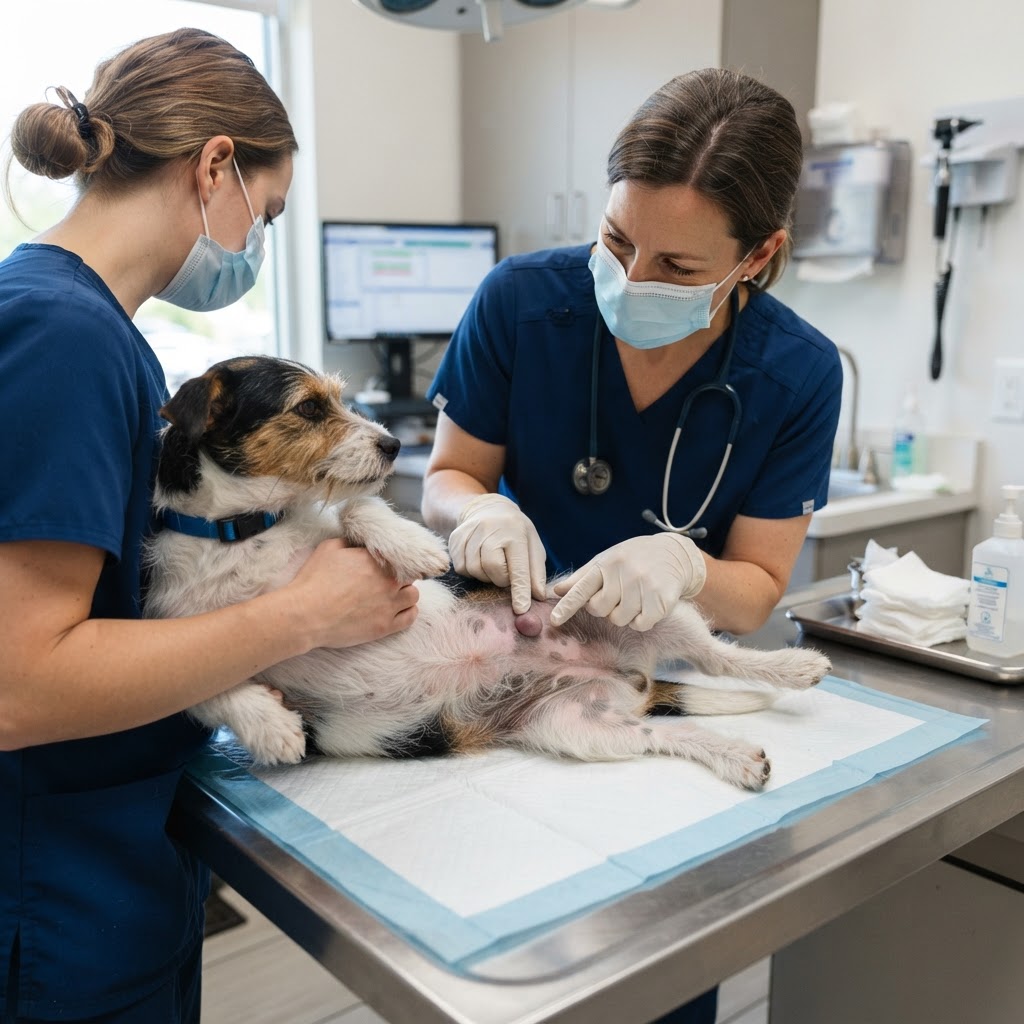
A perineal hernia occurs when pelvic organs (bladder, rectum, prostate) push through the muscles of the pelvic floor, creating a bulge next to the anus. It's almost exclusively seen in intact male dogs over 7 years old. If the bladder becomes trapped, it's a life-threatening emergency.
The average cost of dog perineal hernia surgery is $3,000, with most owners paying between $1,500 and $5,000 per side.
How Much Does Perineal Hernia Surgery Cost?
| Procedure | Cost Range | Notes |
|---|---|---|
| Unilateral perineal hernia repair (one side) | $1,500–$5,000 | Standard repair — muscle flap or mesh |
| Bilateral repair (both sides) | $3,000–$7,500 | Both sides affected in 30–50% of cases |
| Cystopexy (bladder repositioning) | $500–$1,500 additional | If bladder has prolapsed into hernia |
| Colopexy (colon repositioning) | $500–$1,500 additional | Stabilize colon if prolapsed |
| Neuter (castration) — included or separate | $200–$500 additional | Essential — prevents recurrence by reducing hormones |
Cost Breakdown
| Component | Cost |
|---|---|
| Exam + diagnostics (X-rays, ultrasound) | $200–$500 |
| Pre-surgical blood work (especially important for senior dogs) | $80–$200 |
| Anesthesia + monitoring | $150–$400 |
| Perineal hernia repair surgery | $1,500–$5,000 |
| Surgical mesh (if used for large defect) | $100–$500 |
| Neuter (castration — strongly recommended) | $200–$500 |
| Overnight hospitalization (1–3 nights) | $200–$500/night |
| Urinary catheter (if bladder was trapped) | $50–$150 |
| Take-home pain medication + antibiotics | $40–$100 |
| Follow-up visits (2–3) | $50–$150 each |
| Total (one side, with neuter) | $2,500–$7,500 |
Cost by Clinic Type
| Clinic Type | Price Range | Notes |
|---|---|---|
| General practice vet (experienced with hernias) | $1,500–$3,500 | Can handle uncomplicated cases |
| Board-certified surgeon | $2,500–$5,000 | Recommended for complex or bilateral cases |
| Emergency hospital (bladder trapped) | $3,500–$7,000+ | Emergency + surgical complexity premium |
| Teaching hospital | $1,200–$3,000 | Lower cost, supervised by specialists |
Why Is Perineal Hernia So Expensive?
- •Complex anatomy: The surgery involves repairing the pelvic floor muscles, which are deep and difficult to access. The surgeon must avoid damaging the rectum, urethra, and nerves in the area.
- •Senior patients: Most affected dogs are over 7 years old, requiring more thorough pre-anesthetic blood work and monitoring.
- •Additional procedures: Often requires bladder repositioning (cystopexy), colon repositioning (colopexy), and castration — all add cost.
- •Mesh implant: Large hernias require surgical mesh to close the defect ($100–$500).
- •Longer recovery: 2–3 nights of hospitalization with urinary catheter if the bladder was involved.
Signs of Perineal Hernia in Dogs
If your dog can't urinate, go to an emergency vet immediately. A trapped bladder can rupture or cause kidney failure within hours.
- •Bulge or swelling next to the anus
- •Difficulty defecating or straining
- •Constipation
- •Changes in stool shape (ribbon-like)
- •Pain in the rear end area
- •Difficulty urinating (if bladder is trapped — EMERGENCY)
- •Excessive licking of the anal area
- •Lethargy and loss of appetite (if bladder trapped)
Frequently Asked Questions
How much does perineal hernia surgery cost for a dog?
Dog perineal hernia surgery costs $1,500 to $5,000 per side, with an average of $3,000. Bilateral repair (both sides) costs $3,000–$7,500. Total cost including diagnostics, neuter, hospitalization, and follow-up is $2,500–$7,500.
Why is neutering included in perineal hernia surgery?
Neutering is essential because testosterone weakens the pelvic floor muscles. Without castration, the recurrence rate is 20–30%. With castration, it drops to under 10%. Most surgeons require or strongly recommend neutering at the time of hernia repair.
Does pet insurance cover perineal hernia surgery?
If the hernia was not present before enrollment, most policies cover the surgery including diagnostics, surgery, neuter, and hospitalization. Reimbursement is 70–90% after your deductible. Since it develops later in life (7+ years), most dogs enrolled as puppies will be covered.
How long is recovery from perineal hernia surgery?
Recovery takes 4–8 weeks. Hospitalization: 1–3 nights. E-collar for 2–3 weeks. Strict activity restriction for 4–6 weeks. Stool softeners are prescribed for 2–4 weeks to prevent straining. Sutures are removed at 10–14 days. Full healing takes 6–8 weeks.
Can perineal hernia recur after surgery?
Recurrence rate is 5–10% with surgical repair + neutering, and 20–30% without neutering. Bilateral hernias have higher recurrence. Using surgical mesh for large defects reduces recurrence. Following activity restrictions and preventing constipation during recovery also helps.