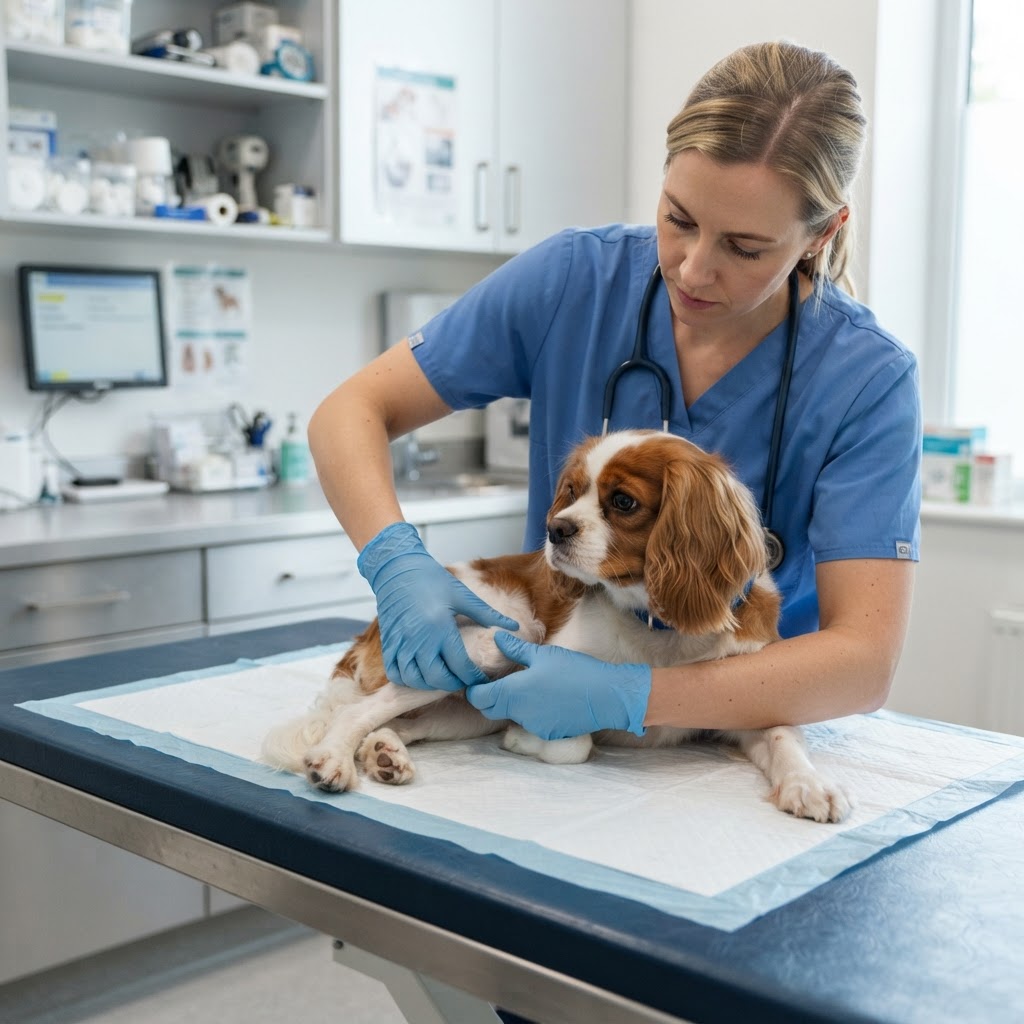
A luxating patella (trick knee) is a condition where the kneecap pops out of its groove. It's extremely common in small breeds — up to 75% of toy breeds like Pomeranians, Chihuahuas, and Yorkshire Terriers are affected. The condition is graded 1–4, and surgery is recommended for grades 2–4 when the dog is limping or in pain.
The average cost of luxating patella surgery is $2,500, with most owners paying between $1,000 and $5,000 per knee. If both knees need surgery, the total cost can reach $2,000–$10,000.
How Much Does Luxating Patella Surgery Cost?
| Grade | Severity | Surgery Needed? | Cost Per Knee |
|---|---|---|---|
| Grade 1 | Kneecap pops out but returns on its own | No — monitor only | $0 |
| Grade 2 | Kneecap pops out and stays out occasionally | Surgery recommended if limping | $1,000–$3,000 |
| Grade 3 | Kneecap mostly out, can be pushed back | Yes — surgery strongly recommended | $1,500–$4,000 |
| Grade 4 | Kneecap permanently out, can't be pushed back | Yes — surgery essential | $2,000–$5,000 |
What Does Luxating Patella Surgery Involve?
Surgery typically combines two techniques:
- •Trochlear wedge recession: Deepening the groove in the femur where the kneecap sits so it stays in place. This is the core procedure and costs $1,000–$3,500.
- •Tibial crest transposition: Moving the attachment point of the kneecap tendon to realign it. This adds $500–$1,500 to the surgery.
- •Soft tissue imbrication: Tightening the tissues around the kneecap to keep it centered. Usually included in the surgery cost.
- •Femoral varus osteotomy: In severe cases, cutting the femur to correct the angle. This adds $1,000–$2,000 and requires bone plates.
Cost by Clinic Type
| Clinic Type | Price Range | Notes |
|---|---|---|
| General practice vet | $1,000–$3,000 | Can perform simpler Grade 2–3 cases |
| Board-certified surgeon | $2,000–$5,000 | Recommended for Grade 3–4 or complex cases |
| Teaching hospital | $1,000–$2,500 | Lower cost, supervised by specialists |
Additional Costs
| Add-On | Cost | Required? |
|---|---|---|
| Pre-surgical exam & X-rays | $200–$400 | Yes |
| Pre-surgical blood work | $80–$200 | Yes |
| Take-home pain medication | $30–$80 | Yes |
| Follow-up X-rays (if bone was cut) | $150–$350 | Yes, if osteotomy performed |
| Joint supplement (long-term) | $20–$60/month | Recommended for joint health |
| Second knee surgery (if bilateral) | $1,000–$5,000 | 30–50% of dogs need both knees done |
Luxating Patella in Cats
Cats can also develop luxating patellas, though it's much less common. Cat luxating patella surgery costs $1,000–$3,000 per knee. See cat surgery costs for more information about feline surgical procedures.
Frequently Asked Questions
How much does luxating patella surgery cost?
Dog luxating patella surgery costs $1,000 to $5,000 per knee, with an average of $2,500. The cost depends on the grade (severity), the surgical technique needed, and whether one or both knees are affected. Grade 4 cases requiring femoral osteotomy cost the most ($3,000–$5,000).
Does my dog need luxating patella surgery?
Grade 1 doesn't need surgery — just monitoring. Grade 2 may need surgery if your dog is limping. Grades 3 and 4 require surgery to prevent arthritis, chronic pain, and CCL tears (which are common secondary injuries in dogs with untreated luxating patella).
Does pet insurance cover luxating patella surgery?
Yes, if your dog didn't show signs of luxating patella before enrollment. However, since it's a congenital condition (present from birth), some insurers may consider it pre-existing if diagnosed before the policy started. Check your policy details.
How long is recovery from luxating patella surgery?
Recovery takes 6–12 weeks. The first 2–4 weeks require strict cage rest. By week 6, your dog should be bearing full weight. Full recovery takes 3–4 months. Physical rehabilitation can speed recovery.
Can luxating patella heal without surgery?
Grade 1 can be managed with weight control, joint supplements, and low-impact exercise. However, Grades 2–4 typically require surgery to prevent worsening, arthritis, and secondary CCL tears. Without surgery, most Grade 3–4 dogs develop chronic lameness.