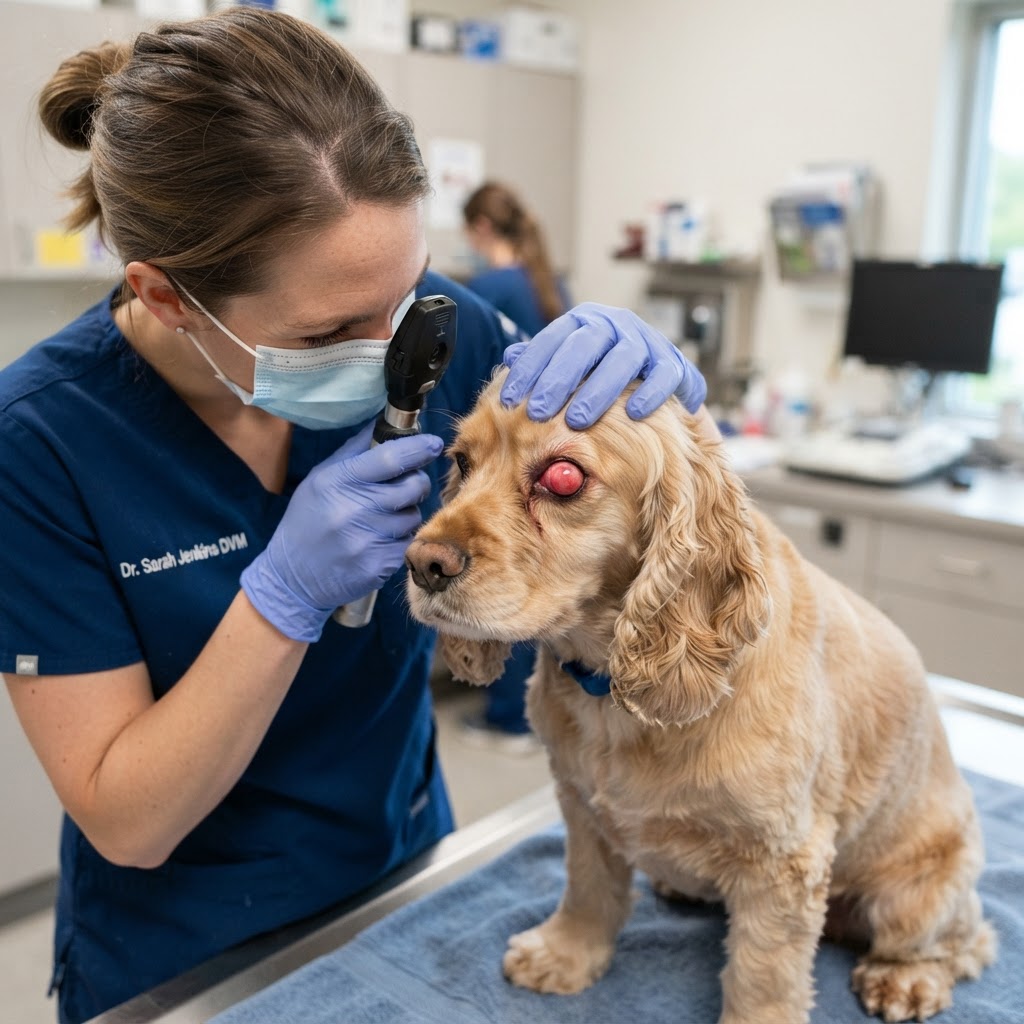
Eye removal (enucleation) is performed when an eye is too damaged or painful to save — from severe trauma, uncontrolled glaucoma, untreatable infections, or tumors. While the decision is emotionally difficult, dogs adapt remarkably well to life with one eye or no eyes.
The average cost of dog eye removal surgery is $1,200, with most owners paying between $987 and $1,483 per eye. More complex cases can reach $2,000–$3,000.
How Much Does Dog Eye Removal Cost?
| Procedure Type | Cost Range | When Used |
|---|---|---|
| Standard enucleation (simple removal) | $987–$1,483 | Most cases — eye removed and lids sutured closed |
| Enucleation with intraocular prosthesis | $1,200–$2,000 | Cosmetic option — silicone ball placed in socket for appearance |
| Exenteration (eye + surrounding tissue) | $1,500–$3,000 | Tumors extending beyond the eye |
| Bilateral enucleation (both eyes) | $2,000–$3,500 | Both eyes affected (end-stage glaucoma, bilateral tumors) |
Why Would a Dog Need Eye Removal?
- •Uncontrolled glaucoma: When medications can't control eye pressure, the eye becomes permanently painful. Removal provides immediate pain relief.
- •Severe trauma: Unrepairable injuries from car accidents, dog fights, or puncture wounds.
- •Inoperable cataracts: If cataracts cause lens-induced uveitis or retinal detachment that's beyond repair.
- •Eye tumors: Malignant tumors of the eye (melanoma, squamous cell carcinoma) require removal to prevent spread.
- •Untreatable infections: Bacterial or fungal infections that don't respond to medication and threaten the eye or the rest of the body.
- •Severe corneal ulcers: Deep ulcers that rupture the eye, making it non-salvageable.
- •End-stage eye disease: When the eye is blind, painful, and no treatment can restore vision or comfort.
Cost Breakdown
| Component | Cost |
|---|---|
| Pre-surgical exam | $50–$150 |
| Pre-surgical blood work | $80–$200 |
| Anesthesia + monitoring | $150–$400 |
| Enucleation surgery | $500–$1,200 |
| Intraocular prosthesis (if chosen) | $200–$600 |
| Overnight hospitalization | $200–$500/night (1 night typical) |
| Take-home pain medication + antibiotics | $40–$100 |
| E-collar | $15–$40 |
| Histopathology (if tumor suspected) | $120–$350 |
| Follow-up visit (suture removal) | $50–$150 |
| Total | $987–$3,000 |
Cost by Clinic Type
| Clinic Type | Price Range |
|---|---|
| General practice vet | $987–$1,500 |
| Board-certified ophthalmologist | $1,200–$2,000 |
| Emergency hospital | $1,500–$2,500 |
| Teaching hospital | $800–$1,200 |
Intraocular Prosthesis — A Cosmetic Option
For owners concerned about appearance after eye removal, an intraocular prosthesis (silicone ball) can be placed inside the eye socket before the lids are sutured closed. This keeps the eye looking normal while removing the painful interior.
Not all dogs are candidates — the eye must be free of infection and cancer. The prosthesis adds $200–$600 to the surgery cost. Ask your vet or ophthalmologist if this option is appropriate.
Recovery from Eye Removal
- •Day 1–3: Dog goes home with E-collar. Swelling and bruising around the eye area is normal. Pain medication and antibiotics administered.
- •Week 1: Swelling decreases. Dog adjusts to reduced field of vision. E-collar must stay on 24/7.
- •Week 2: Sutures removed. Most swelling gone. Dog is adapting well to monocular vision.
- •Week 3–4: Full recovery. Fur grows back over the surgical site. Dog returns to normal activity.
- •Most dogs adapt to having one eye within days. They compensate by turning their head more and rely more on hearing and smell. Dogs who lose both eyes adapt too — they use their whiskers, hearing, and memory of their environment to navigate.
Frequently Asked Questions
How much does it cost to remove a dog's eye?
Dog eye removal (enucleation) costs $987 to $1,483 on average. With an intraocular prosthesis (for cosmetic appearance), the cost is $1,200–$2,000. Bilateral removal (both eyes) costs $2,000–$3,500. Total including blood work, anesthesia, medications, and follow-up is $1,200–$3,000.
Does pet insurance cover eye removal surgery?
Yes, most pet insurance covers eye removal when medically necessary (glaucoma, trauma, tumor, infection). Reimbursement is typically 70–90% after your deductible. If the condition was present before enrollment, it may be excluded as pre-existing.
Can a dog live a normal life with one eye?
Absolutely. Dogs adapt to monocular vision within days. They compensate by turning their head more and rely more on their other senses. Most owners report their dogs return to normal activities — running, playing, fetching — within 2–4 weeks of eye removal.
Can a dog live with no eyes?
Yes. Dogs who have both eyes removed can live full, happy lives. They navigate using their whiskers, hearing, and spatial memory. They can still run, play, eat, and enjoy life. Many owners report their blind dogs are happier after eye removal because chronic pain is gone.
Is eye removal painful?
The surgery itself is performed under general anesthesia. Post-operative pain is managed with medication for 3–7 days. Most dogs are comfortable within 24–48 hours. The relief from chronic eye pain (glaucoma, infection) is often immediate — many dogs act more energetic and happier after removal of a painful eye.