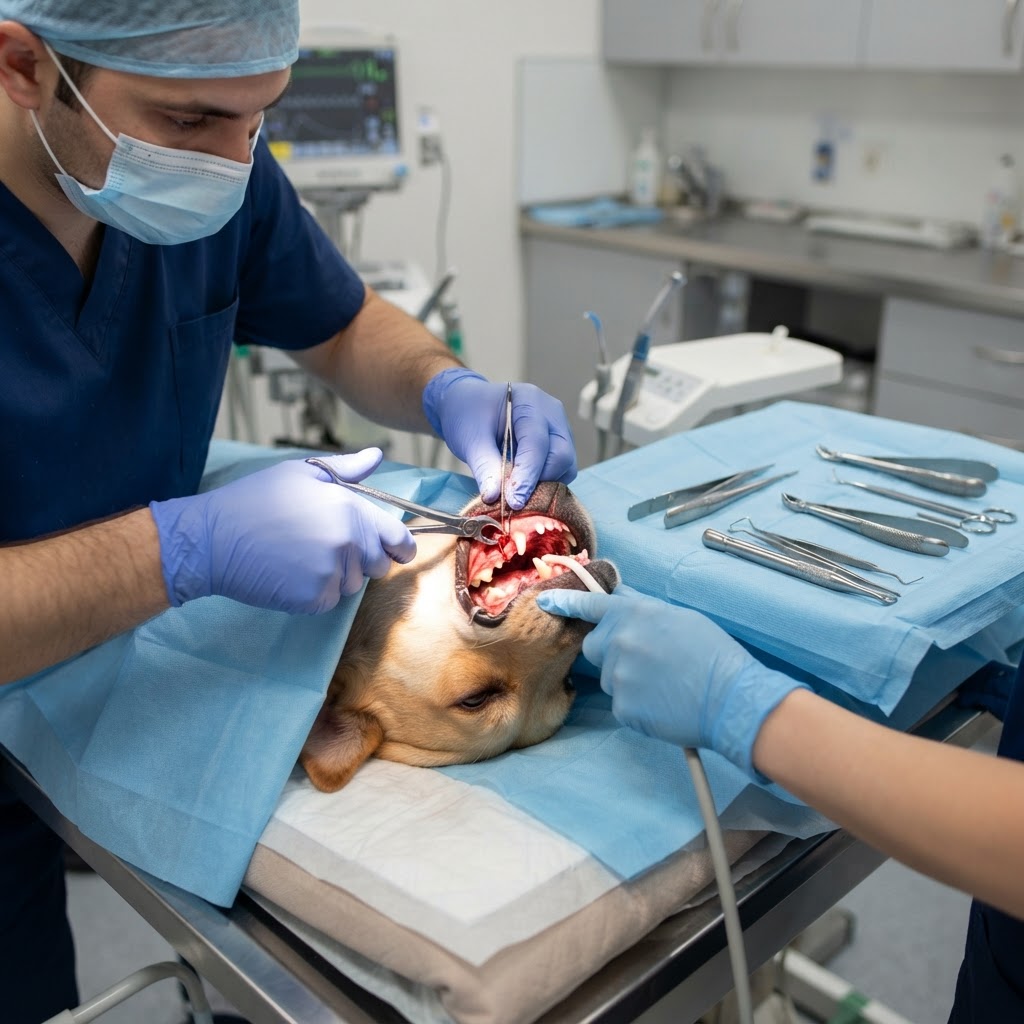
A root canal (endodontic therapy) is an alternative to tooth extraction that saves the tooth while removing infection from the pulp. It's typically recommended for functional teeth (canines and carnassials) in working dogs, show dogs, or when the owner wants to preserve the tooth. For most pet dogs, extraction is simpler and more cost-effective.
The average cost of a dog root canal is $1,000 per tooth, with prices ranging from $500 to $1,500+ depending on the tooth type and complexity.
Dog Root Canal Cost by Tooth Type
| Tooth Type | Cost Range | Notes |
|---|---|---|
| Canine tooth (fang) | $500–$1,200 | Most common root canal — long single root |
| Carnassial tooth (4th premolar) | $700–$1,500 | Largest tooth, 3 roots, more complex |
| Incisor | $500–$800 | Small single root, simpler procedure |
| Molar | $600–$1,300 | 2–3 roots, moderate complexity |
| Crown placement (after root canal) | $500–$1,200 additional | Metal crown protects the weakened tooth |
Root Canal vs. Extraction — Cost Comparison
| Factor | Root Canal | Extraction |
|---|---|---|
| Cost per tooth | $500–$1,500 | $78–$600 |
| Surgery time | 60–90 minutes | 15–45 minutes |
| Recovery | 1–2 weeks | 1–2 weeks |
| Tooth preserved? | Yes — tooth remains functional | No — tooth removed |
| Follow-up X-rays needed | Yes — at 6 and 12 months ($150–$350 each) | Usually none |
| Specialist required? | Yes — board-certified veterinary dentist | No — general practice vet can extract |
| Long-term success | 85–95% success rate | N/A — tooth is gone, no further issues |
When Is a Root Canal Recommended?
A root canal is typically recommended for:
- Broken canine teeth: The long canine teeth (fangs) are important for grasping and are the most common teeth treated with root canals.
- Working and police dogs: Dogs that use their teeth for work (bite work, retrieval) benefit from preserving functional teeth.
- Show dogs: Missing teeth can be penalized in conformation showing.
- Fractured carnassial teeth: These large chewing teeth are worth saving if the root structure is intact.
- Owner preference: Some owners prefer to save the tooth rather than have it removed.
For most pet dogs, extraction is the standard treatment — it's simpler, cheaper, and dogs adapt perfectly to missing teeth. Your vet can help you decide which option is best.
What Does a Dog Root Canal Involve?
- Anesthesia: Dog is fully anesthetized (same as any dental procedure).
- Dental X-rays: Confirm root structure and infection extent ($100–$300).
- Access: A hole is drilled into the tooth to reach the pulp chamber.
- Cleaning: The infected pulp tissue is removed with specialized files.
- Disinfection: The root canal is flushed with antiseptic solution.
- Filling: The cleaned canal is filled with an inert material (gutta-percha or MTA).
- Sealing: The access hole is sealed with composite resin.
- Crown (optional): A metal crown may be placed for protection ($500–$1,200).
- Follow-up: X-rays at 6 and 12 months to confirm healing ($150–$350 each).
Total Cost Including Everything
| Component | Cost |
|---|---|
| Consultation with veterinary dentist | $100–$200 |
| Pre-anesthetic blood work | $80–$200 |
| Dental X-rays | $100–$300 |
| Anesthesia + monitoring | $150–$400 |
| Root canal procedure | $500–$1,500 |
| Crown (optional) | $500–$1,200 |
| Take-home medication | $30–$60 |
| Follow-up X-rays (6 + 12 months) | $300–$700 |
| Total (without crown) | $1,200–$3,400 |
| Total (with crown) | $1,700–$4,600 |
Frequently Asked Questions
How much does a dog root canal cost?
Dog root canal costs $500 to $1,500+ per tooth, with an average of $1,000. Adding a metal crown costs $500–$1,200 extra. Total cost including consultation, blood work, X-rays, anesthesia, and follow-up is $1,200–$3,400 without a crown, or $1,700–$4,600 with a crown.
Is a root canal better than extraction for my dog?
For working dogs, show dogs, or owners who want to preserve the tooth, root canal is an excellent option with an 85–95% success rate. For most pet dogs, extraction ($78–$600) is simpler, cheaper, and dogs adapt perfectly to missing teeth. Your vet or veterinary dentist can advise based on the specific tooth and your dog's lifestyle.
Does pet insurance cover dog root canals?
Yes, most pet insurance covers root canal therapy when it's medically necessary (fractured tooth with pulp exposure, tooth infection). Reimbursement is typically 70–90% after your deductible. Elective procedures (like crowns for cosmetic reasons) may not be covered.
How long does a dog root canal take?
The procedure takes 60–90 minutes per tooth. Your dog will be at the vet for 4–6 hours total including check-in, blood work, anesthesia, root canal, and recovery. Most dogs go home the same day.
How long does a dog root canal last?
With proper care, a dog root canal can last the lifetime of the dog. Success rate is 85–95%. Follow-up X-rays at 6 and 12 months confirm healing. Regular dental cleanings help maintain the treated tooth.