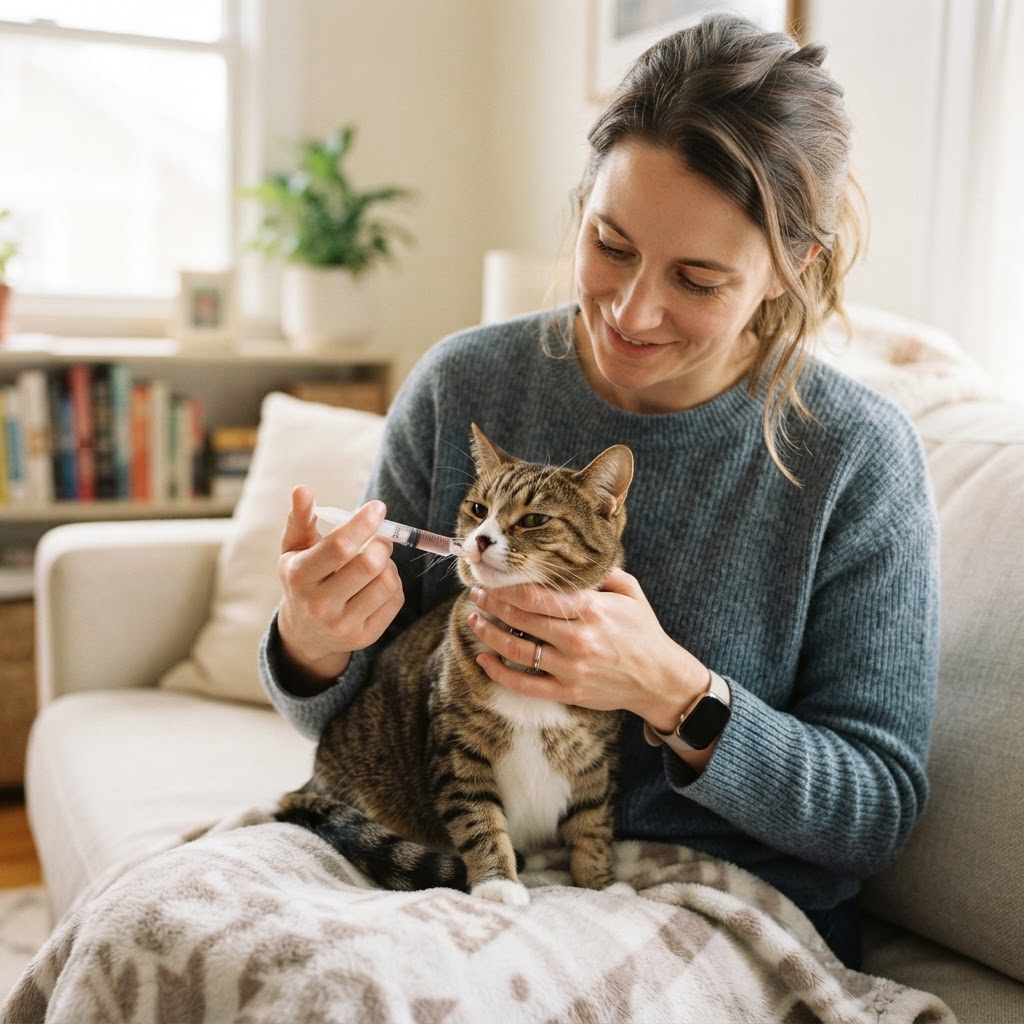
Cat medications range from routine preventive care (flea/tick, deworming) to lifelong prescriptions for chronic conditions like hyperthyroidism, kidney disease, and diabetes. Cats require different medications and doses than dogs — some dog-safe medications are toxic to cats — so always use vet-prescribed medications.
The average cost of cat medication is $40 per month for preventive care, with prescription medications adding $20–$150/month depending on the condition.
Cat Medication Cost by Type
| Medication Type | Cost Range/Month | Average | Notes |
|---|---|---|---|
| Flea & tick prevention | $15–$60 | $35 | Revolution Plus, Bravecto, Catego — topical preferred for cats |
| Dewormer (roundworms/hookworms) | $10–$25 | $15 | Quarterly or as needed — Drontal, Profender |
| Heartworm prevention (Revolution) | $40–$60 | $50 | Less critical for cats but still recommended — combined with flea |
| Thyroid medication (Methimazole) | $20–$50 | $30 | Hyperthyroidism — very common in older cats. See thyroid surgery option |
| Kidney disease medication | $20–$80 | $45 | Amlodipine (BP), phosphate binders, appetite stimulants |
| Insulin (diabetes) | $30–$100 | $60 | Lantus, ProZinc — plus syringes and blood glucose monitoring |
| Pain medication (Meloxicam) | $15–$40 | $25 | Limited NSAID options for cats — Meloxicam used carefully |
| Pain (Gabapentin) | $15–$40 | $20 | Safe for cats — widely used for chronic and post-surgical pain |
| Anxiety medication | $15–$40 | $25 | Fluoxetine, Gabapentin, Trazodone — same as dogs |
| Antibiotics (course) | $20–$60 | $35 | Amoxicillin/Clav, Doxycycline, Metronidazole |
| Mirtazapine (appetite stimulant) | $15–$35 | $20 | For cats not eating — kidney disease, post-surgery |
| Antiviral (FHV-1) | $30–$80 | $50 | Famciclovir — for feline herpesvirus flare-ups |
Annual Cat Medication Cost
| Cat Type | Preventive Only | + One Chronic Condition | + Multiple Conditions |
|---|---|---|---|
| Healthy adult cat (1–10 years) | $240–$600/year | $480–$1,440/year | $720–$2,400/year |
| Senior cat (10+ years) | $300–$700/year | $600–$1,800/year | $960–$3,000/year |
| Diabetic cat (insulin + monitoring) | — | $600–$1,800/year | $960–$2,880/year |
| Hyperthyroid cat (Methimazole) | — | $360–$1,200/year | $600–$1,800/year |
| CKD cat (kidney disease) | — | $480–$1,440/year | $720–$2,400/year |
Cat-Specific Medication Considerations
- NSAIDs are limited in cats: Meloxicam is the only commonly used NSAID for cats, and requires careful dosing and kidney monitoring. Dogs have more NSAID options (Carprofen, Deracoxib). Never give cats dog NSAIDs without vet approval.
- Topical medications preferred: Cats resist oral medication — topical flea/tick treatments and transdermal gels (Methimazole can be compounded as a transdermal) are easier for cats and owners.
- Compounded medications: Many cat medications are compounded into flavored chews, liquids, or transdermal gels. Compounding adds $10–$30/month but dramatically improves compliance.
- Toxic medications: Acetaminophen (Tylenol) is FATAL to cats. Never give cats any human medication without veterinary approval.
Frequently Asked Questions
How much does cat medication cost per month?
Cat medication costs $20–$150 per month depending on the condition. Preventive care (flea/tick + deworming) costs $15–$60/month. Thyroid medication (Methimazole) costs $20–$50/month. Insulin for diabetic cats costs $30–$100/month. Kidney disease medications cost $20–$80/month. Annual total for a healthy cat is $240–$600; a cat with chronic conditions is $600–$2,400/year.
Does pet insurance cover cat medications?
Yes, most pet insurance covers prescription medications for cats when prescribed for a covered condition. Reimbursement is 70–90% after your deductible. Preventive medications (flea/tick) may require a wellness add-on. Pre-existing conditions are excluded — get insurance before your cat gets sick.
Can I use GoodRx for cat medications?
Yes! Many cat medications are human generics (Methimazole, Gabapentin, Fluoxetine, Amlodipine, Mirtazapine). Ask your vet for a written prescription and fill it at a human pharmacy with GoodRx — 50–70% cheaper than vet prices. Cat-specific medications (Revolution Plus, Bravecto for cats) are brand-only and won't have GoodRx discounts.
How do I give medication to a cat that won't take pills?
Options include: compounding into flavored liquid or chews, transdermal gels (Methimazole can be compounded as transdermal), pill pockets (treat with hidden medication), hiding in wet food, or using a pill gun. If all else fails, ask your vet about injectable options (e.g., B12 injections, Convenia antibiotic injection). Compounding costs $10–$30/month extra but dramatically improves compliance.