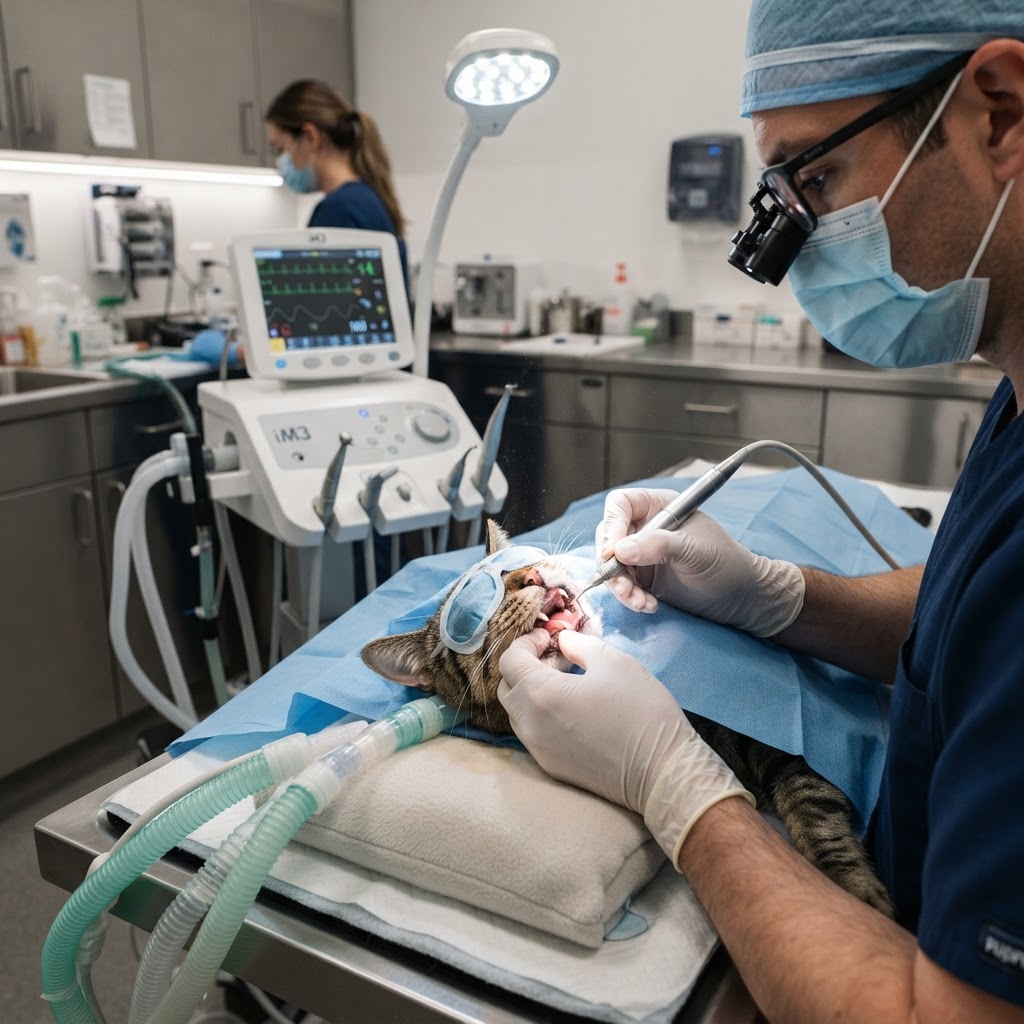
Tooth resorption (formerly called feline odontoclastic resorptive lesions or FORLs) is one of the most common and painful dental conditions in cats. It affects 30–60% of cats, yet many owners don't realize their cat is suffering because cats hide pain exceptionally well. The body's own cells (odontoclasts) break down the tooth structure, and there is no cure other than extraction.
The cost of treating cat tooth resorption ranges from $300 to $1,500, depending on how many teeth are affected and whether surgical extraction is required.
How Much Does Tooth Resorption Treatment Cost?
| Number of Affected Teeth | Cost Range | Average |
|---|---|---|
| Single tooth | $300–$800 | $500 |
| 2–3 teeth | $500–$1,000 | $700 |
| 4–6 teeth | $700–$1,500 | $1,000 |
| Many teeth (full mouth extraction) | $1,000–$3,000 | $1,800 |
What Is Tooth Resorption?
Tooth resorption is a progressive condition where odontoclasts (cells that normally break down baby teeth) become active in adult teeth and begin destroying the tooth structure. It typically starts at the root, below the gum line, and progresses upward.
The cause is unknown. Despite extensive research, no definitive cause has been identified. Theories include: autoimmune response, viral infections, dietary factors, and genetic predisposition. There is no known prevention.
Stages of Tooth Resorption
| Stage | Description | Treatment |
|---|---|---|
| Stage 1 | Mild enamel loss. No gum inflammation. Cat shows no signs. | Monitor with annual X-rays |
| Stage 2 | Dentin involvement. Some gum inflammation. Cat may show mild discomfort. | Extraction recommended |
| Stage 3 | Pulp involvement. Significant pain. Cat may drool, drop food, or stop eating. | Extraction required |
| Stage 4 | Extensive root resorption. Crown may be partially missing. Severe pain. | Extraction or coronectomy (crown removal only) |
| Stage 5 | Tooth is gone, only root remnants remain visible on X-rays. | May not need extraction if no inflammation |
Why Dental X-rays Are Essential
Tooth resorption is often invisible to the naked eye — it starts below the gum line. Dental X-rays are required to diagnose and stage tooth resorption. Without X-rays:
- Stage 1 and early Stage 2 resorption will be missed
- Root remnants from teeth that appear "missing" may be causing chronic pain
- The extent of multi-root tooth involvement can't be assessed
- The correct extraction technique (full extraction vs. coronectomy) can't be determined
Full mouth X-rays cost $100–$250 and are always recommended before any dental procedure in cats.
Cost Breakdown
| Component | Cost |
|---|---|
| Pre-anesthetic exam | $50–$100 |
| Pre-anesthetic blood work | $80–$200 |
| Full mouth dental X-rays | $100–$250 |
| Anesthesia + monitoring | $150–$350 |
| Extraction (per tooth) | $50–$400 |
| Coronectomy (if root is resorbed) | $50–$200 |
| Take-home pain medication | $25–$50 |
| Follow-up X-rays (6 months) | $100–$250 |
Signs Your Cat Has Tooth Resorption
Cats hide pain well, but watch for these subtle signs:
- Dropping food while eating
- Chewing on one side of the mouth
- Prefering soft food over hard kibble
- Excessive drooling
- Pawing at the mouth
- Jaw "chattering" when eating
- Hiding, decreased activity, or irritability
- Weight loss
- Screaming or crying when yawning or eating (severe cases)
Frequently Asked Questions
How much does it cost to treat tooth resorption in cats?
Cat tooth resorption treatment costs $300 to $1,500 depending on the number of affected teeth. Single tooth extraction costs $300–$800. Multiple teeth: $500–$1,500. Full mouth extraction for widespread resorption: $1,000–$3,000. The cost includes X-rays, anesthesia, and extraction.
Can tooth resorption be cured without extraction?
No. There is no cure for tooth resorption — extraction is the only treatment. The body's cells will continue destroying the tooth, and the pain will worsen. Even if the tooth appears to be "self-destructing," the nerve remains exposed and painful until the tooth is removed.
What causes tooth resorption in cats?
The cause is unknown despite extensive research. Theories include autoimmune responses, viral infections (calicivirus), dietary factors, and genetics. There is no known prevention. Annual dental cleanings with X-rays catch resorption early when treatment is simpler and cheaper.
Does pet insurance cover tooth resorption treatment?
Yes, most pet insurance covers tooth resorption treatment including X-rays, anesthesia, and extraction. Reimbursement is typically 70–90% after your deductible. If your cat was diagnosed before enrollment, it may be considered pre-existing.
Will my cat be OK after losing teeth to resorption?
Yes. Cats adapt extremely well to missing teeth — even cats who have all teeth removed. Most cats eat dry kibble within 2–3 weeks after surgery. The relief from chronic pain makes most cats more active and happier after affected teeth are removed.