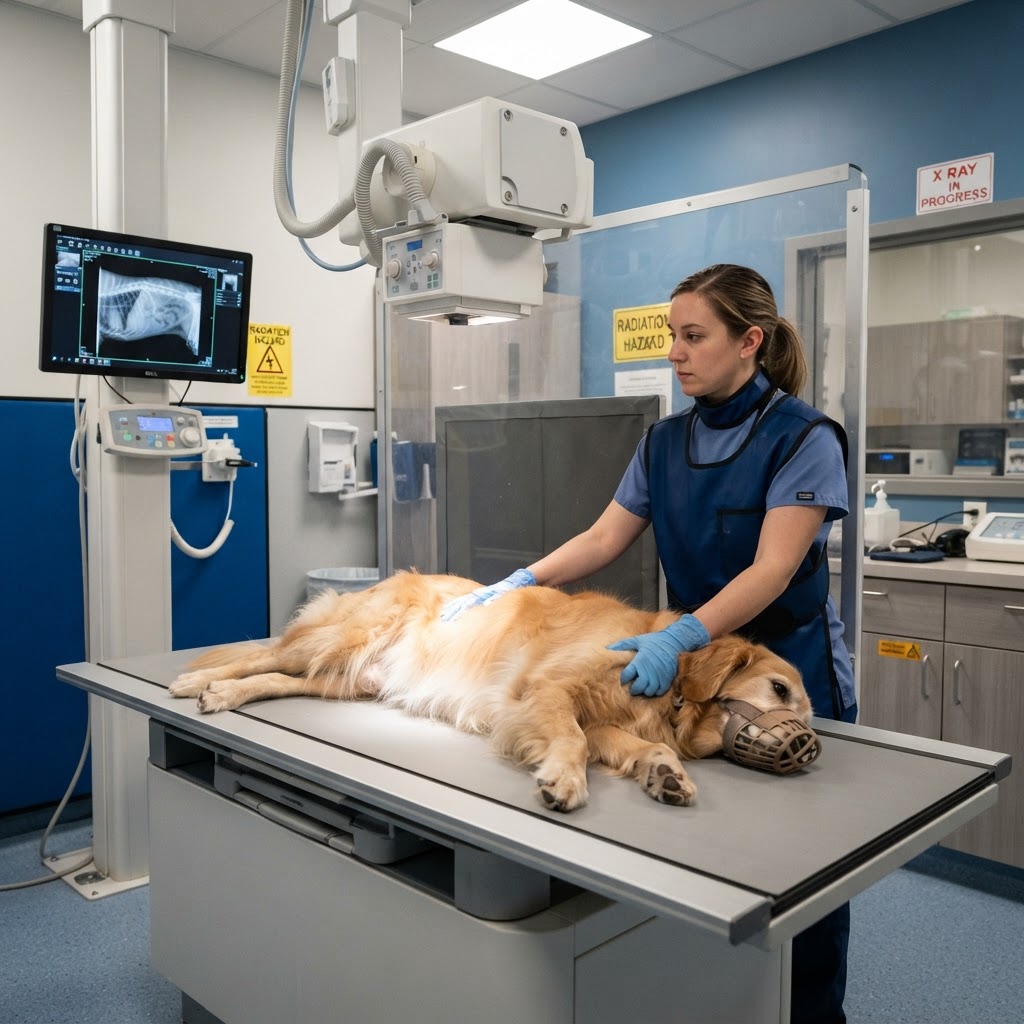
X-rays (radiographs) are one of the most common diagnostic tools in veterinary medicine. They help diagnose fractures, foreign bodies, tumors, heart enlargement, lung disease, and more. X-rays are quick, relatively affordable, and available at most vet clinics.
The average cost of a dog X-ray is $200, with most owners paying between $75 and $500 per image depending on the body area and number of views needed.
Dog X-Ray Cost by Body Area
| Body Area | Cost Range | Average | Views Needed |
|---|---|---|---|
| Chest (thorax) | $150–$350 | $250 | 2–3 views (lateral + ventral-dorsal) |
| Abdomen | $150–$400 | $250 | 2 views — check for blockages, tumors |
| Leg / limb (fracture) | $75–$250 | $150 | 2 views (lateral + craniocaudal) |
| Dental (full mouth) | $150–$300 | $200 | Usually done under anesthesia during dental cleaning |
| Spine | $200–$500 | $350 | Multiple views needed — larger area |
| Full body | $250–$500 | $400 | 3+ views — cancer staging, trauma assessment |
| Hip (dysplasia evaluation) | $200–$400 | $300 | Special positioning — hip dysplasia diagnosis |
| Skull / head | $150–$400 | $250 | Dental disease, nasal disease, head trauma |
Cost by Number of Views
| Number of Views | Cost | When Used |
|---|---|---|
| 1 view | $75–$150 | Simple screening, single limb |
| 2 views | $150–$300 | Standard — most X-rays need 2 angles |
| 3+ views | $250–$500 | Complex fractures, full body, cancer staging |
Cost by Clinic Type
| Clinic Type | Price Range | Notes |
|---|---|---|
| General practice vet | $75–$250 | Most affordable — standard equipment |
| Digital X-ray (general practice) | $100–$300 | Higher quality images, faster results |
| Emergency hospital | $150–$500 | Higher cost — after-hours, emergency equipment |
| Specialty/specialist | $200–$500 | Board-certified radiologist interpretation |
| Teaching hospital | $75–$200 | Lower cost, supervised by specialists |
What X-Rays Detect in Dogs
- Bone fractures and joint issues: Fractures, hip dysplasia, arthritis, bone tumors
- Chest problems: Pneumonia, heart enlargement, lung tumors, fluid in chest
- Abdominal issues: Foreign body obstruction, bladder stones, organ enlargement, tumors, intestinal blockage
- Dental disease: Tooth root abscesses, fractured teeth, jaw bone loss
- Pregnancy: Confirm pregnancy (after day 45), count puppies
- Cancer staging: Check if cancer has spread to lungs or other organs
Frequently Asked Questions
How much does a dog X-ray cost?
A dog X-ray costs $75 to $500 per image, with an average of $200. Chest and abdomen X-rays cost $150–$400. Leg X-rays cost $75–$250. Dental X-rays cost $150–$300. Full body X-rays cost $250–$500. Most X-rays need 2 views, which costs $150–$300 at a general practice.
Does pet insurance cover X-rays?
Yes, most pet insurance covers X-rays when they're medically necessary — to diagnose illness, injury, or for cancer staging. Reimbursement is 70–90% after your deductible. Routine screening X-rays may not be covered unless there's a medical reason.
Does my dog need to be sedated for an X-ray?
Most X-rays don't require sedation, but some do: if the dog is in pain and can't hold still, if precise positioning is needed (hip X-rays for OFA evaluation), or for dental X-rays. Sedation adds $50–$150 to the cost. For most standard X-rays, the dog just needs to hold still for a few seconds.
What's the difference between X-ray and MRI for dogs?
X-rays ($75–$500) show bones and large structures but can't see soft tissue details. MRI ($2,500–$6,000) shows detailed soft tissue, spinal cord, and brain. X-rays are quick, cheap, and widely available. MRI requires anesthesia, specialized equipment, and costs 10–20x more. X-rays are the first step; MRI is for complex cases X-rays can't resolve.