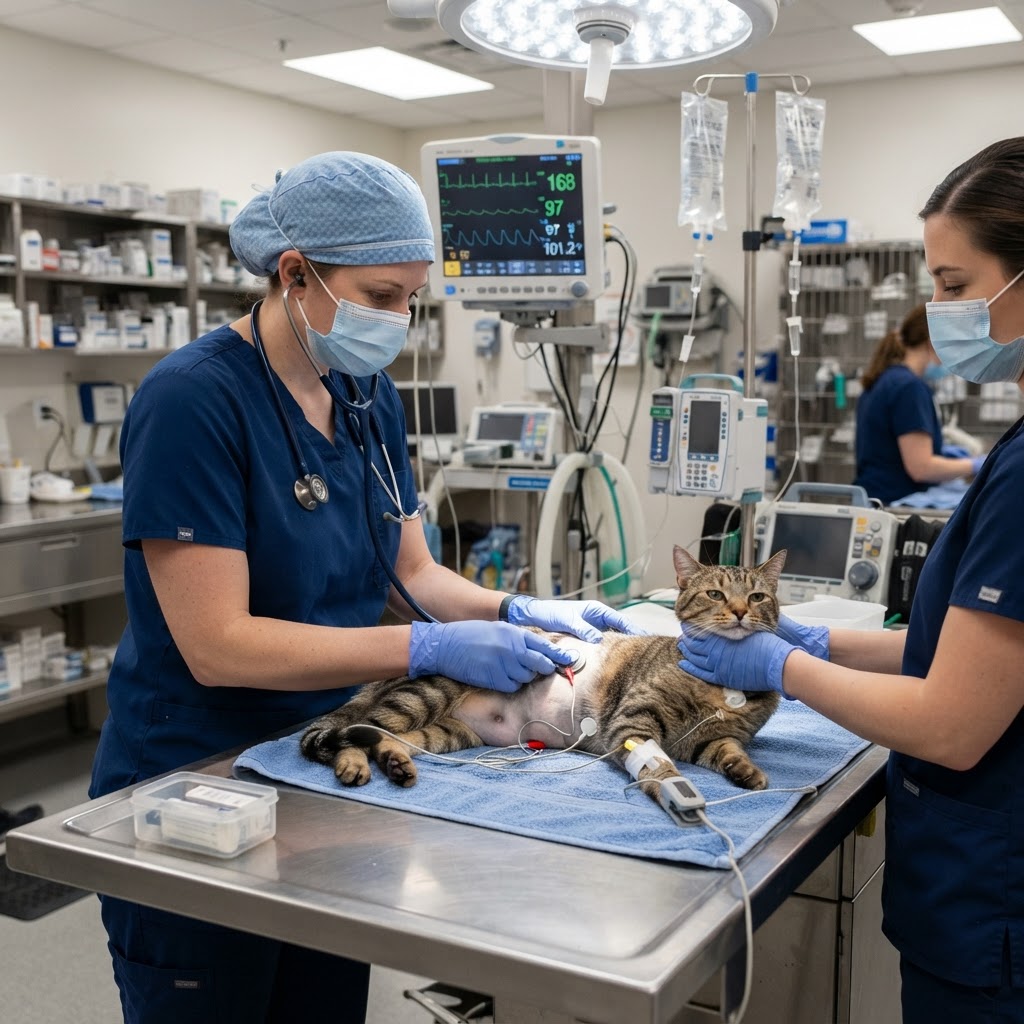
Cats are masters at hiding illness, so by the time they show obvious symptoms, the situation may already be urgent. Emergency vet visits for cats are slightly less expensive than dogs on average (cats are smaller, requiring less medication and anesthesia), but costs can still escalate quickly with diagnostics and treatment.
The average cost of a cat emergency vet visit is $400, with most owners paying between $200 and $5,000+ depending on the emergency.
Cost by Emergency Type
| Emergency Type | Cost Range | Average | Notes |
|---|---|---|---|
| Exam only (no treatment) | $100–$250 | $140 | Emergency exam fee — slightly less than dogs |
| Minor emergency (exam + meds) | $200–$500 | $350 | Vomiting, diarrhea, minor wounds |
| Moderate emergency (exam + diagnostics + treatment) | $500–$2,000 | $1,000 | Bloodwork, X-rays, IV fluids, medications |
| Major emergency (surgery or ICU) | $1,500–$5,000+ | $3,000 | Emergency surgery, urinary blockage, trauma |
| Urinary blockage (male cats — common emergency) | $750–$3,000 | $1,800 | Unblocking + cystotomy or PU surgery |
Cost Breakdown
| Component | Cost |
|---|---|
| Emergency exam fee | $100–$250 |
| Blood work (CBC + chemistry) | $80–$250 |
| X-rays (1–2 views) | $75–$300 |
| Ultrasound (if needed) | $300–$800 |
| Urinalysis + urine culture | $80–$200 |
| IV fluids | $100–$250 |
| Medications | $40–$150 |
| Overnight hospitalization (if needed) | $200–$400/night |
| Urinary catheterization (blockage) | $300–$800 |
| Emergency surgery (if needed) | $1,000–$4,000+ |
| Total (moderate emergency) | $775–$2,350 |
Most Common Cat Emergencies
| Emergency | Typical Cost | Signs |
|---|---|---|
| Urinary blockage (male cats) | $750–$3,000 | Straining in litter box, crying, no urine produced |
| Vomiting/dehydration | $200–$800 | Repeated vomiting, lethargy, not eating |
| Bladder stones | $1,000–$3,000 | Blood in urine, straining, frequent litter box visits |
| Respiratory distress | $500–$2,000 | Open-mouth breathing, panting, wheezing |
| Toxin ingestion (lilies, antifreeze) | $500–$3,000+ | Vomiting, drooling, lethargy after exposure |
| Trauma (fall, dog attack) | $500–$3,000+ | Limping, hiding, wounds, shock |
| Amputation (trauma/cancer) | $500–$2,500 | Severe limb injury or bone cancer |
When to Rush Your Cat to the ER
Cats hide pain — don't wait if you see:
- Straining in litter box with no urine (EMERGENCY — fatal within 24–48 hours)
- Open-mouth breathing or panting (EMERGENCY — cats don't pant normally)
- Pale or blue gums
- Sudden paralysis of hind legs (saddle thrombus — blood clot)
- Repeated vomiting or inability to keep water down
- Suspected lily ingestion (EXTREMELY toxic to cats — fatal without immediate treatment)
- Severe lethargy — cat won't move or respond
- Seizures
- Major trauma (fall from height, dog attack, car)
- Eyes that are suddenly dilated, painful, or cloudy
Frequently Asked Questions
How much does an emergency vet visit cost for a cat?
A cat emergency vet visit costs $200 to $5,000+, with an average of $400. The emergency exam fee is $100–$250. Minor emergencies cost $200–$500. Moderate emergencies with diagnostics and treatment cost $500–$2,000. Major emergencies requiring surgery or ICU cost $1,500–$5,000+. Urinary blockages in male cats cost $750–$3,000.
Does pet insurance cover cat emergency vet visits?
Yes, most pet insurance covers emergency vet visits for cats, including the exam fee, diagnostics, treatment, hospitalization, and surgery. Reimbursement is 70–90% after your deductible. This can save $1,000–$4,500 on a single emergency.
What is the most common cat emergency?
Urinary blockage in male cats is the most common and life-threatening cat emergency. Crystals or stones block the urethra, preventing urination. Toxins build up in the blood, and the bladder can rupture. This is fatal within 24–48 hours without treatment. Treatment costs $750–$3,000 including unblocking, catheterization, and hospitalization.
How can I reduce emergency vet costs for my cat?
Keep your cat indoors (prevents trauma, toxin exposure, and fights), feed a urinary-friendly diet (prevents crystals and blockages), keep lilies and toxic plants out of your home, and don't skip annual checkups (catches problems early). Have pet insurance or an emergency fund of $2,000–$3,000 for cats.