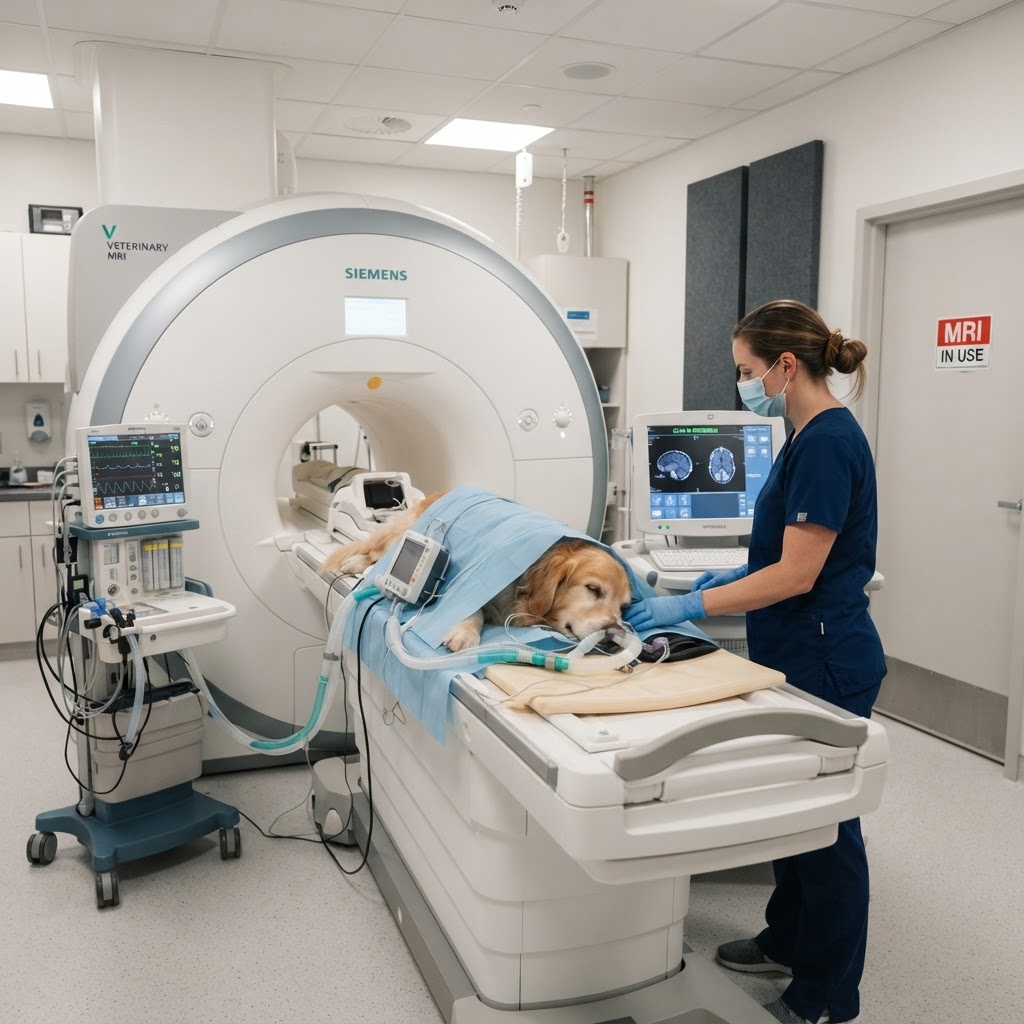
MRI (Magnetic Resonance Imaging) is the most advanced imaging tool in veterinary medicine. It provides detailed images of soft tissues, the brain, spinal cord, and joints — things that X-rays and ultrasound can't see. MRI is typically used for neurological cases, spinal issues, and cancer staging when other diagnostics aren't enough.
The average cost of a dog MRI is $3,500, with most owners paying between $2,500 and $6,000 depending on the area being scanned and the facility.
Dog MRI Cost by Scan Area
| Scan Area | Cost Range | Average | Common Reasons |
|---|---|---|---|
| Brain / head | $2,500–$5,000 | $3,500 | Seizures, brain tumor, neurological signs |
| Spine | $2,500–$5,000 | $3,500 | IVDD (disc disease), spinal cord compression, paralysis |
| Joint / limb | $2,000–$4,000 | $3,000 | ACL evaluation, joint disease, tendon injuries |
| Abdomen (rare) | $3,000–$6,000 | $4,500 | Complex abdominal masses, cancer staging |
| Full body | $3,500–$6,000+ | $5,000 | Cancer staging, multi-area evaluation |
Cost Breakdown
| Component | Cost |
|---|---|
| Pre-MRI consultation | $100–$200 |
| Pre-scan blood work (organ function check) | $100–$250 |
| Chest X-rays (check heart/lungs before anesthesia) | $150–$350 |
| Anesthesia + monitoring (MRI requires general anesthesia) | $200–$500 |
| MRI scan | $2,000–$4,500 |
| Radiologist interpretation fee | $200–$500 |
| Recovery monitoring (from anesthesia) | $100–$300 |
| Total | $2,950–$6,600 |
Cost by Facility Type
| Facility Type | Cost Range | Notes |
|---|---|---|
| Specialty referral center (with MRI on-site) | $2,500–$5,000 | Most common — board-certified radiologist |
| University teaching hospital | $2,000–$4,000 | Lower cost, supervised by specialists |
| Emergency hospital (with MRI) | $3,000–$6,000 | Higher cost — emergency facility premium |
| Shared MRI facility (human hospital) | $2,500–$5,000 | Some vets rent human MRI time — limited availability |
When Does Your Dog Need an MRI?
- Seizures: MRI of the brain to look for tumors, inflammation, or structural abnormalities
- Spinal disease (IVDD): MRI of the spine to locate disc herniation and plan spinal surgery
- Neurological signs: Weakness, ataxia (wobbly gait), head tilt, balance issues
- Nasal disease: Chronic nasal discharge — MRI better than X-ray or CT for soft tissue nasal disease
- Cancer staging: Determine extent of tumors before surgical planning
- Joint evaluation: Complex soft tissue joint injuries that X-rays can't resolve
Why Is Dog MRI So Expensive?
MRI machines cost $1–3 million to purchase and $100,000+/year to maintain. Dogs must be under general anesthesia for the scan (they can't hold still for 30–60 minutes), which adds anesthesia costs, monitoring, and recovery time. A board-certified radiologist interprets the images. Only specialty hospitals and universities typically have MRI capability.
Frequently Asked Questions
How much does a dog MRI cost?
A dog MRI costs $2,500 to $6,000+, with an average of $3,500. Brain and spinal MRIs cost $2,500–$5,000. The total including pre-scan blood work, X-rays, anesthesia, MRI scan, radiologist interpretation, and recovery is $2,950–$6,600.
Does pet insurance cover MRI for dogs?
Yes, most pet insurance covers MRI when it's medically necessary — for diagnosing neurological conditions, cancer staging, or surgical planning. Reimbursement is 70–90% after your deductible. A $3,500 MRI with 80% reimbursement saves $2,700.
Why does my dog need anesthesia for an MRI?
Dogs must stay perfectly still for 30–60 minutes during the MRI scan. Any movement blurs the images. Unlike humans who can hold still on command, dogs require general anesthesia. This adds $200–$500 to the cost and requires pre-anesthetic blood work and chest X-rays.
What's the difference between MRI and CT scan for dogs?
MRI ($2,500–$6,000) excels at soft tissue — brain, spinal cord, ligaments, tendons. CT scan ($2,500–$5,000) excels at bone detail and is faster (minutes vs. 30–60 min). CT is better for fractures, nasal disease, and lung evaluation. MRI is better for spinal cord, brain, and soft tissue. Your vet will recommend the right one.