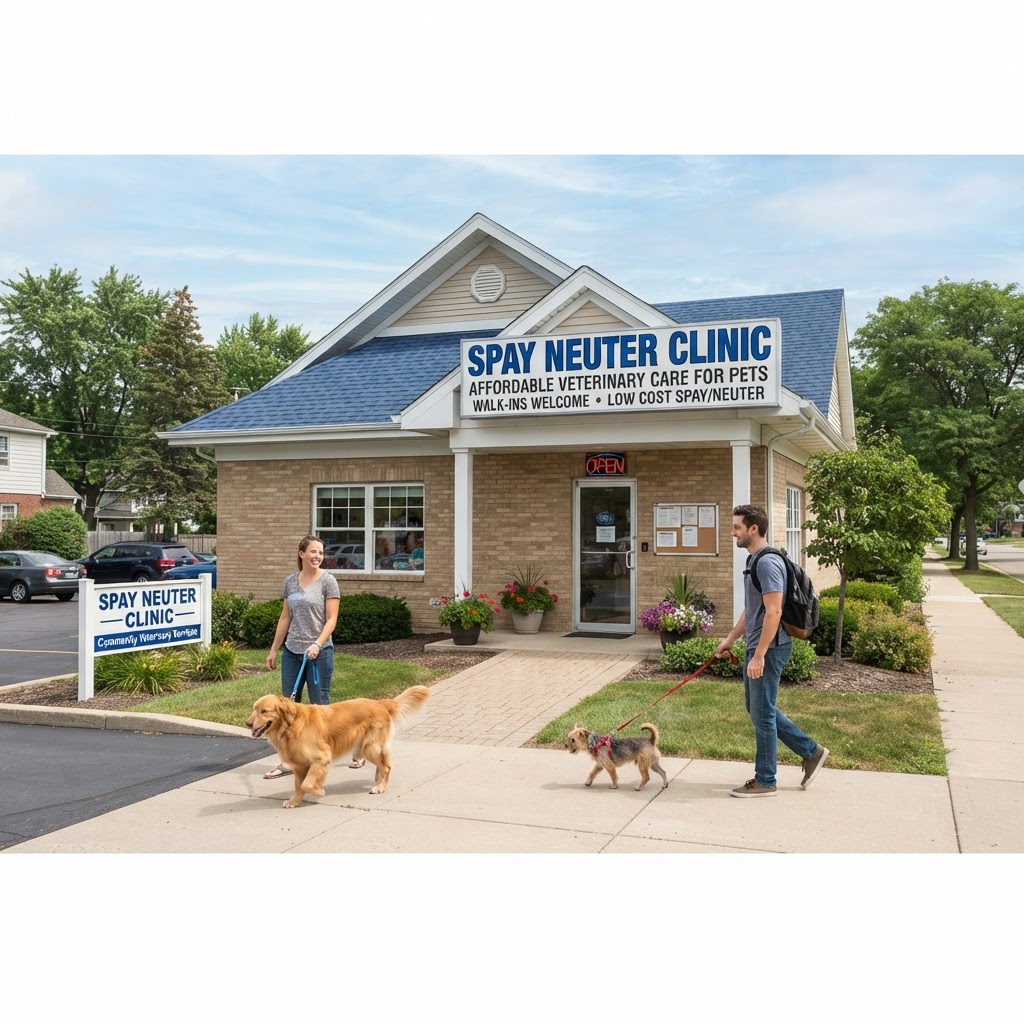
Spaying or neutering your pet doesn't have to cost hundreds of dollars. Low-cost spay and neuter clinics operate in most U.S. cities, charging $35 to $200 for the same surgery that costs $200–$2,000 at a private veterinary hospital.
Use this guide to find affordable spay and neuter clinics near you, compare prices, and learn how to qualify for free or subsidized surgery programs.
Low-Cost Spay and Neuter Price Comparison
| Procedure | Low-Cost Clinic | Private Hospital | You Save |
|---|---|---|---|
| Cat Neuter | $35–$95 | $95–$385 | Up to 80% |
| Cat Spay | $35–$150 | $120–$500 | Up to 75% |
| Dog Neuter (small) | $45–$100 | $200–$300 | Up to 75% |
| Dog Neuter (large) | $100–$200 | $400–$885 | Up to 75% |
| Dog Spay (small) | $50–$150 | $250–$500 | Up to 70% |
| Dog Spay (large) | $100–$200 | $500–$2,000 | Up to 90% |
How to Find Low-Cost Spay and Neuter Clinics Near You
There are several ways to find affordable spay and neuter services in your area:
- •ASPCA Spay/Neuter Alliance: The ASPCA operates low-cost clinics in many cities. Search at aspca.org to find a location near you.
- •Humane Society of the United States: Local humane societies often run low-cost spay/neuter clinics or can refer you to one. Many offer free surgery for low-income households.
- •SpayUSA (North Shore Animal League): A national network with a searchable database of low-cost spay/neuter programs by ZIP code. Visit spayusa.org.
- •Local animal shelters: Most municipal and county shelters have information about low-cost spay/neuter programs in the area.
- •Veterinary teaching hospitals: If you live near a veterinary school, teaching hospitals offer low-cost surgery performed by supervised students.
- •Mobile spay/neuter clinics: Many cities have mobile clinics that rotate through neighborhoods, offering $35–$100 spay/neuter.
National Low-Cost Spay/Neuter Programs
| Program | Price Range | Coverage | Who Qualifies |
|---|---|---|---|
| ASPCA Spay/Neuter Alliance | Free–$100 | Select cities | Low-income households |
| Humane Society Clinics | $35–$200 | Nationwide | General public |
| SpayUSA Network | $35–$200 | Nationwide | General public |
| TNR Programs (feral cats) | Free–$50 | Most cities | Feral/community cats |
| Mobile MASH Clinics | $35–$100 | Rural areas | General public |
| Pets for Life (HSUS) | Free | Select cities | Underserved neighborhoods |
How to Qualify for Free or Subsidized Spay/Neuter
Many programs offer free or heavily discounted surgery for pet owners who meet income requirements. Here's how to qualify:
- •Income-based programs: If you receive SNAP, Medicaid, SSI, or other government assistance, you likely qualify for free or $20–$50 spay/neuter at participating clinics.
- •Geographic programs: Programs like HSUS Pets for Life serve specific underserved neighborhoods with free spay/neuter and veterinary care.
- •Feral cat programs: TNR (Trap-Neuter-Return) programs spay/neuter feral and community cats for free or $15–$50. Contact your local shelter for TNR resources.
- •Voucher programs: Many humane societies offer spay/neuter vouchers that cover part or all of the surgery cost at participating vets.
- •Multiple pet discounts: Some clinics offer a discount if you bring multiple pets on the same day.
What to Expect at a Low-Cost Clinic
Low-cost clinics offer the same surgery as a private hospital, but with a streamlined process to keep costs down:
- •Drop-off and pick-up: Most clinics use a batch model — you drop off in the morning (7–8 AM) and pick up in the afternoon (3–5 PM).
- •Surgery quality: The surgery is performed by a licensed veterinarian — the same surgery you'd get at a private practice.
- •What's usually included: Anesthesia, surgery, and basic pain medication.
- •What's usually NOT included: Pre-surgical blood work, IV fluids, e-collar, microchip, and follow-up visits. You can often add these for an extra fee.
- •Facility: Low-cost clinics are efficient, high-volume facilities. Don't expect private exam rooms or extensive waiting areas.
When a Low-Cost Clinic May Not Be the Best Choice
For most healthy pets, low-cost clinics are perfectly safe. However, consider a private hospital if:
- •Your pet is senior (7+ years) and needs pre-surgical blood work and IV fluids during surgery.
- •Your pet has a known health condition (heart murmur, kidney disease, diabetes) that requires special monitoring.
- •Your female dog is in heat or pregnant — this increases surgical risk and some low-cost clinics won't accept these cases.
- •Your dog is cryptorchid (undescended testicle) — this requires a more complex procedure.
- •Your pet is extremely anxious or aggressive — private hospitals can provide more individualized care.
Other Ways to Save on Spay and Neuter Costs
- •Ask your vet about package pricing: Some private vets offer spay/neuter packages that bundle surgery, blood work, pain meds, and follow-up for a lower total price.
- •Check for community events: Many cities host free or low-cost spay/neuter days, especially during "Spay/Neuter Awareness Month" in February.
- •Pet insurance wellness plans: Some wellness plans cover spay/neuter surgery. If you're already paying for pet insurance, check if this is included.
- •Nonprofit financial assistance: RedRover Relief, Brown Dog Foundation, and The Pet Fund offer grants for veterinary care including spay/neuter.
- •Compare 3+ clinics: Even among private hospitals, prices can vary by 200–300% for the same procedure. Always call and compare.
Frequently Asked Questions
Where can I get my pet spayed or neutered for free?
Free spay/neuter is available through ASPCA programs, HSUS Pets for Life, local humane societies, and TNR programs for feral cats. You typically need to show proof of low income (SNAP, Medicaid, SSI). Contact your local shelter for a list of free programs in your area.
How much does it cost to spay or neuter at a low-cost clinic?
Low-cost clinics charge $35–$200 for spay/neuter surgery, compared to $200–$2,000 at private veterinary hospitals. Cat neuters start at $35, dog spays for large breeds may cost up to $200. See the full price comparison table above.
Are low-cost spay/neuter clinics safe?
Yes. The surgery is performed by licensed veterinarians using the same techniques as private hospitals. Low-cost clinics keep prices down through high volume and streamlined operations — not by cutting corners on surgical quality.
What's the difference between a low-cost clinic and a private vet?
Low-cost clinics focus on spay/neuter only, with a batch process (morning drop-off, afternoon pick-up). Private hospitals offer more individualized care, pre-surgical blood work, IV fluids, private exam rooms, and follow-up visits — but at 3–10x the cost.
Can I get financial help for spay/neuter surgery?
Yes. Organizations like RedRover Relief, Brown Dog Foundation, The Pet Fund, and local humane societies offer grants and vouchers for spay/neuter surgery. Many are income-based but some are available to anyone in financial need.
Does pet insurance cover spay/neuter surgery?
Standard pet insurance policies typically don't cover elective spay/neuter. However, some wellness plans or preventive care add-ons include it. If you have wellness coverage, check your policy details.
How do I qualify for free spay/neuter surgery?
Free spay/neuter programs typically require proof of low income — such as SNAP, Medicaid, SSI, or WIC benefits. Some programs serve specific underserved neighborhoods (like HSUS Pets for Life) or are available to anyone regardless of income. Contact your local humane society or ASPCA for eligibility requirements.
What documents do I need to bring to a low-cost spay/neuter clinic?
Most clinics require: (1) proof of current vaccinations (or they'll vaccinate for an extra fee), (2) proof of income for income-based programs, (3) a completed intake form, and (4) cash or card for payment. Some clinics require your pet to be fasted (no food after midnight the night before).
Can I get my pet spayed or neutered for free near me?
Yes. Search for ASPCA programs, HSUS Pets for Life, local humane society clinics, and TNR programs for feral cats in your area. Many cities also have free spay/neuter days during February (Spay/Neuter Awareness Month). Contact your local animal shelter for a list of free programs.
What happens if I can't afford spay/neuter surgery?
If you can't afford spay/neuter, contact: (1) your local humane society for vouchers or free programs, (2) RedRover Relief grants, (3) Brown Dog Foundation, (4) The Pet Fund, or (5) your local animal control for low-cost options. Most areas have resources to help — don't give up without checking these options.
Are there age limits for low-cost spay/neuter clinics?
Most low-cost clinics will spay/neuter pets starting at 8–16 weeks (early-age spay/neuter) and have no upper age limit, though senior pets (7+ years) may require pre-surgical blood work that costs extra. Some clinics won't accept pets in heat, pregnant, or with health conditions — check before booking.
How long does it take to get an appointment at a low-cost spay/neuter clinic?
Wait times vary by location — some clinics have same-week availability while others have 2–8 week waitlists, especially in urban areas. Book as early as possible. For female pets, try to schedule before they go into heat to avoid higher surgical risks and costs.