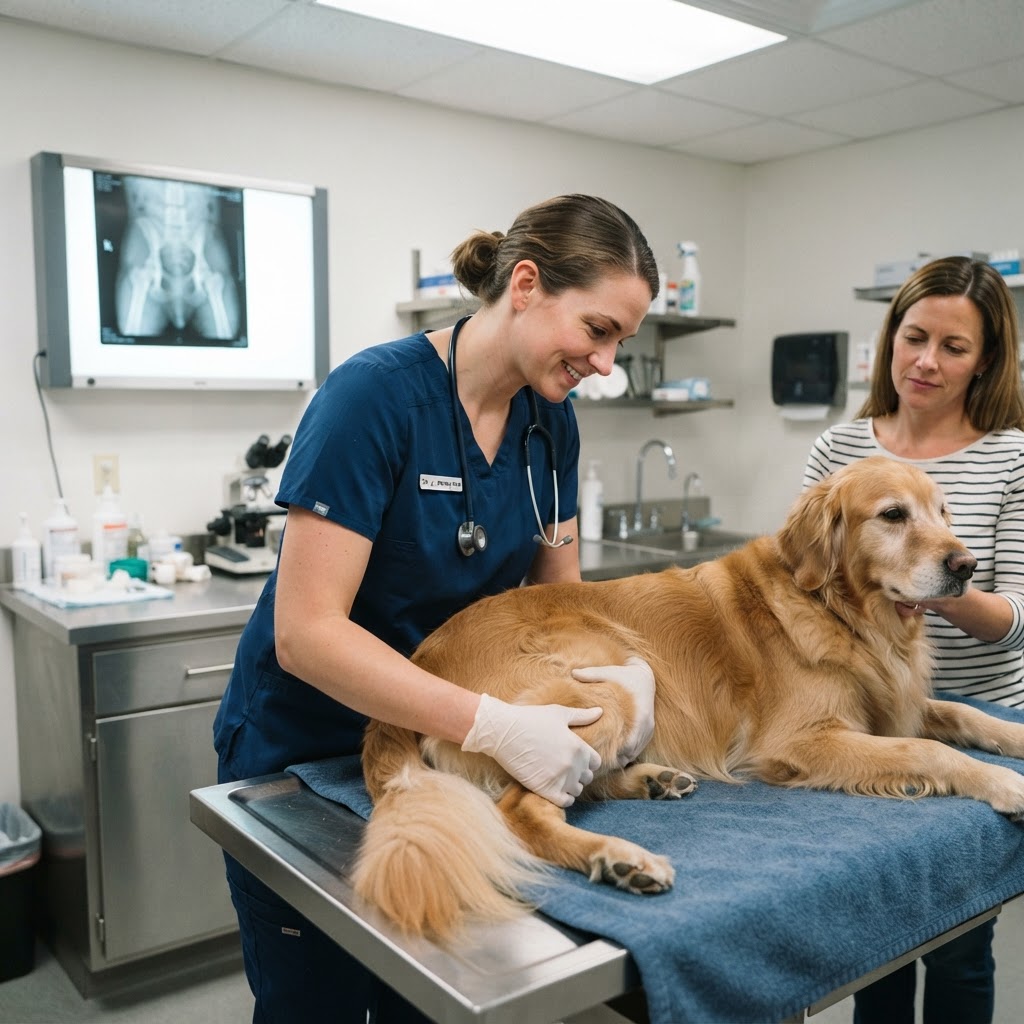
Hip dysplasia is a genetic condition where the hip joint doesn't fit together properly, leading to arthritis and pain. It's especially common in large breeds like German Shepherds, Labrador Retrievers, and Golden Retrievers. Surgery options range from $1,700 for a conservative FHO to $5,000+ for a total hip replacement.
The average cost of dog hip dysplasia surgery is $3,000, with most owners paying between $1,700 and $5,000 per hip.
Dog Hip Dysplasia Surgery Cost by Procedure
| Procedure | Cost Range | Average | Best For |
|---|---|---|---|
| FHO (Femoral Head Ostectomy) | $1,000–$3,000 | $2,000 | Small to medium dogs (<50 lbs), older dogs |
| TPO (Triple Pelvic Osteotomy) | $2,500–$5,000 | $3,500 | Young dogs (under 10 months), no arthritis yet |
| Total Hip Replacement (THR) | $3,500–$7,000 | $5,000 | Any size, severe dysplasia, best long-term outcome |
| DAR (Dorsal Acetabular Rim) | $2,000–$4,000 | $3,000 | Young dogs with shallow hip socket |
| Conservative management (no surgery) | $500–$2,000/year | $1,000/year | Mild cases, dogs not good surgical candidates |
Which Surgery Does My Dog Need?
| Factor | FHO | TPO | THR |
|---|---|---|---|
| Dog size | Under 50 lbs ideal | Any size | Any size (20+ lbs) |
| Age | Any age | Under 10 months only | 12+ months |
| Arthritis present? | Yes — removes the arthritic joint | No — must be done before arthritis develops | Yes — replaces the joint entirely |
| Recovery time | 4–8 weeks | 8–12 weeks | 8–12 weeks |
| Long-term outcome | Good — pain-free, slightly reduced range of motion | Excellent — preserves natural joint | Excellent — new joint, full function |
Cost by Clinic Type
| Clinic Type | FHO | TPO | THR |
|---|---|---|---|
| General practice vet | $1,000–$2,500 | Usually not offered | Not offered |
| Board-certified surgeon | $1,500–$3,000 | $2,500–$5,000 | $3,500–$6,000 |
| Specialty orthopedic center | $2,000–$3,500 | $3,000–$5,500 | $4,000–$7,000 |
| Teaching hospital | $1,000–$2,000 | $2,000–$4,000 | $2,500–$5,000 |
Conservative Management (Non-Surgical)
Not all dogs with hip dysplasia need surgery. Conservative management can be effective for mild cases:
Conservative management costs $500–$2,000/year depending on the combination of treatments. While it doesn't fix the underlying problem, it can keep your dog comfortable for years.
- •Weight management: Reduces stress on joints. Free — just portion control.
- •Joint supplements: Glucosamine, chondroitin, fish oil — $20–$60/month
- •NSAIDs (anti-inflammatory): Carprofen, meloxicam — $20–$50/month
- •Physical therapy: Underwater treadmill, laser therapy — $50–$100/session
- •Stem cell therapy: $1,500–$3,000 per treatment (emerging option)
- •Librela injection: Monthly monoclonal antibody injection for osteoarthritis — $50–$100/month
Additional Costs
| Add-On | Cost | Required? |
|---|---|---|
| Pre-surgical X-rays (hip scoring) | $150–$350 | Yes — confirms dysplasia and assesses arthritis |
| Pre-surgical blood work | $80–$200 | Yes |
| Overnight hospitalization | $200–$500/night | 1–3 nights for TPO and THR; same-day for FHO |
| Take-home pain medication | $40–$100 | Yes |
| Follow-up X-rays | $150–$350 | Yes — at 6–8 weeks for TPO and THR |
| Physical rehabilitation | $50–$100/session | Especially important for FHO — active recovery needed |
| Joint supplements (long-term) | $20–$60/month | Recommended for all dysplasia cases |
Frequently Asked Questions
How much does dog hip dysplasia surgery cost?
Dog hip dysplasia surgery costs $1,000 to $7,000 per hip depending on the procedure. FHO costs $1,000–$3,000, TPO costs $2,500–$5,000, and total hip replacement costs $3,500–$7,000. The national average is $3,000 per hip.
What is the best hip dysplasia surgery for dogs?
Total hip replacement (THR) offers the best long-term outcome — a completely new joint with full function. However, it's the most expensive ($3,500–$7,000). For young dogs under 10 months with no arthritis yet, TPO ($2,500–$5,000) can prevent arthritis from developing. For older or smaller dogs, FHO ($1,000–$3,000) is an excellent, cost-effective option.
Does pet insurance cover hip dysplasia surgery?
Hip dysplasia is a genetic condition, so coverage depends on when you enrolled. If your dog showed signs or was diagnosed before enrollment, it's considered pre-existing and won't be covered. If you enrolled before any symptoms appeared, most policies cover the surgery at 70–90% reimbursement after your deductible.
Can a dog live with hip dysplasia without surgery?
Yes, many dogs with mild to moderate hip dysplasia live comfortably with conservative management — weight control, joint supplements, anti-inflammatory medication, and physical therapy ($500–$2,000/year). Surgery is recommended when conservative management no longer controls the pain or when quality of life declines.
How long is recovery from hip dysplasia surgery?
FHO: 4–8 weeks (fastest recovery). TPO: 8–12 weeks. Total hip replacement: 8–12 weeks. All require strict cage rest for the first 4–6 weeks, followed by gradual leash walking and physical rehabilitation.