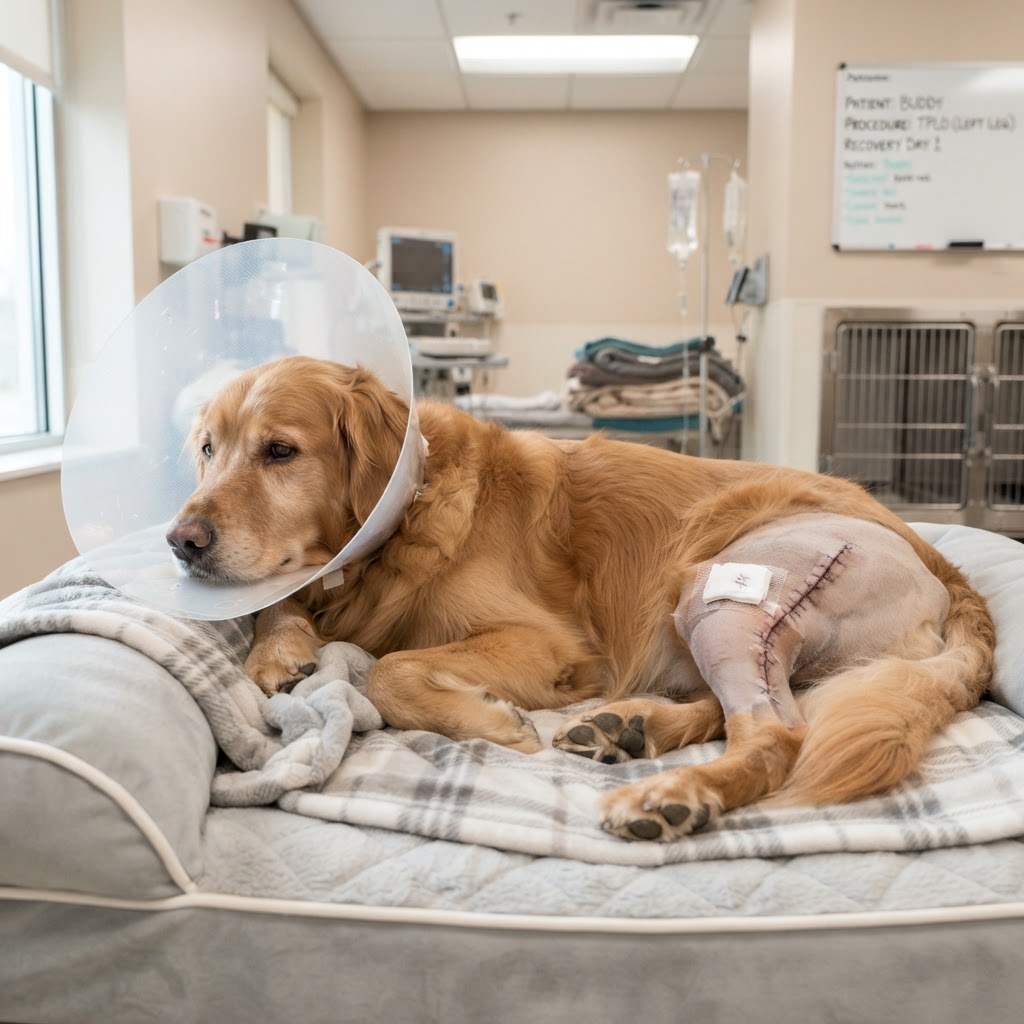
TPLO (Tibial Plateau Leveling Osteotomy) is the gold standard surgical technique for repairing a torn CCL (cranial cruciate ligament) in dogs. Unlike traditional techniques that try to replace the ligament, TPLO changes the biomechanics of the knee joint so the ligament is no longer needed. It has the highest success rate (90–95%) and is recommended for large, active dogs.
The average cost of TPLO surgery is $4,500, with most owners paying between $3,500 and $7,000. When you include pre-surgical diagnostics, hospitalization, and follow-up care, the total cost ranges from $4,400 to $9,000.
How Much Does TPLO Surgery Cost?
| Cost Component | Price Range | Details |
|---|---|---|
| Pre-surgical exam & X-rays | $200–$500 | Confirms CCL tear, checks meniscus |
| Pre-surgical blood work | $80–$200 | Required for anesthesia safety |
| TPLO surgery | $3,500–$7,000 | Includes anesthesia, bone plate, screws, surgeon fee |
| Overnight hospitalization | $200–$500/night | 1–2 nights typical |
| Take-home pain medication | $40–$100 | 2–4 weeks of NSAIDs + gabapentin |
| Follow-up X-rays (6–8 weeks) | $150–$350 | Confirms bone healing |
| Physical rehabilitation | $50–$100/session | 6–12 sessions recommended |
| Total Cost | $4,400–$9,000 | Everything included |
Cost by Clinic Type
| Clinic Type | Price Range | Notes |
|---|---|---|
| Board-certified surgeon (referral practice) | $3,500–$6,000 | Most common — surgeon travels to your vet or you go to their practice |
| Specialty orthopedic center | $4,000–$7,000 | 24/7 monitoring, advanced equipment |
| Veterinary teaching hospital | $2,500–$5,000 | Lower cost, performed by supervised students |
| Emergency hospital (same-day TPLO) | $5,000–$8,000+ | Premium for emergency/after-hours |
What's Included in the TPLO Surgery Cost?
When a surgeon quotes you $3,500–$7,000 for TPLO, that typically includes:
It usually does NOT include: pre-surgical blood work, pre-surgical X-rays, overnight hospitalization, take-home medications, follow-up X-rays, or physical rehabilitation. Always ask for an itemized quote.
- •Anesthesia and monitoring during surgery
- •Surgical procedure (bone cut, plate placement, screw insertion)
- •Titanium bone plate and screws (implant cost: $400–$800 alone)
- •Meniscal examination and meniscectomy if needed
- •Post-operative X-rays (to confirm plate placement)
- •Surgical recovery and monitoring
Why Is TPLO More Expensive Than Other ACL Surgeries?
TPLO costs 2–4x more than lateral suture surgery because:
- •Bone cutting (osteotomy): The surgeon cuts the tibia bone, rotates it, and secures it with a bone plate. This is much more complex than placing a suture.
- •Implant cost: The titanium bone plate and screws cost $400–$800 wholesale. This is passed on to you.
- •Board-certified surgeon required: TPLO should only be performed by a board-certified veterinary surgeon. Their expertise costs more.
- •Longer anesthesia time: TPLO takes 1.5–3 hours, vs. 45–90 minutes for lateral suture.
- •Specialized equipment: TPLO requires specialized saws, drills, and plate-bending tools.
- •Longer recovery monitoring: Most TPLO patients stay 1–2 nights; lateral suture patients often go home same day.
TPLO vs. Other ACL Surgery Options
| Factor | <a href="/dog-tplo-surgery-cost">TPLO</a> | <a href="/dog-tta-surgery-cost">TTA</a> | <a href="/dog-lateral-suture-surgery-cost">Lateral Suture</a> |
|---|---|---|---|
| Cost | $3,500–$7,000 | $3,000–$5,000 | $750–$3,000 |
| Best for | All sizes, active dogs | Medium-large dogs | Small-medium dogs (<50 lbs) |
| Success rate | 90–95% | 90–95% | 85–90% |
| Recovery time | 8–16 weeks | 8–12 weeks | 8–12 weeks |
| Technique | Cuts and rotates tibia bone | Advances tibial tuberosity | Places nylon suture outside joint |
| Implant | Bone plate + 6 screws | Titanium cage + screws | Heavy suture material |
TPLO Recovery Timeline
| Week | Activity Level | Milestones |
|---|---|---|
| Week 1–2 | Strict cage rest. Leash walks for potty only (5 min). | Swelling decreases. Pain managed with medication. |
| Week 3–4 | Short leash walks (5–10 min, 2–3x/day). | Sutures removed. Mild weight-bearing begins. |
| Week 5–8 | Longer leash walks (15–20 min). No stairs, no jumping. | Follow-up X-rays confirm bone healing. Increase activity. |
| Week 9–12 | Longer walks, gentle hills. Begin physical therapy. | Near-full weight bearing. Range of motion improving. |
| Week 13–16 | Return to normal activity (no intense running/jumping yet). | Full recovery. Bone fully healed. |
| Month 4–6 | Full activity including running and swimming. | Complete recovery. |
Frequently Asked Questions
How much does TPLO surgery cost for a dog?
TPLO surgery costs $3,500 to $7,000. The national average is about $4,500 for the surgery itself, or $4,400–$9,000 total when including pre-surgical diagnostics, hospitalization, medications, follow-up X-rays, and physical rehabilitation.
Is TPLO worth the cost?
For large or active dogs (50+ lbs), TPLO is generally considered worth the investment. It has the highest success rate (90–95%), lowest re-injury rate, and best long-term outcomes for returning to full activity. For small or low-activity dogs, lateral suture ($750–$3,000) may be a more cost-effective option with similar outcomes.
Does pet insurance cover TPLO surgery?
Yes, most pet insurance policies cover TPLO surgery, including pre-surgical diagnostics, surgery, hospitalization, medications, and follow-up visits. Reimbursement is typically 70–90% after your deductible. If your dog had a CCL injury before enrollment, the other knee may be excluded as a bilateral pre-existing condition.
How long does TPLO recovery take?
TPLO recovery takes 8–16 weeks. The first 4–6 weeks require strict cage rest with only short leash walks for potty breaks. Follow-up X-rays at 6–8 weeks confirm bone healing. Full return to normal activity takes 4–6 months. Physical rehabilitation can speed recovery.
Can TPLO surgery fail?
TPLO has a 90–95% success rate. Complications include implant failure (1–5%), infection (2–8%), and bone healing problems (1–3%). Choosing a board-certified surgeon and following post-op restrictions closely minimizes these risks.
Can my dog have both knees done at the same time?
Generally no. Most surgeons recommend doing one TPLO, allowing it to heal (8–12 weeks), then doing the other knee. Doing both simultaneously is extremely stressful on the dog and increases complication risk. 40–60% of dogs will need the second knee done within 2 years.