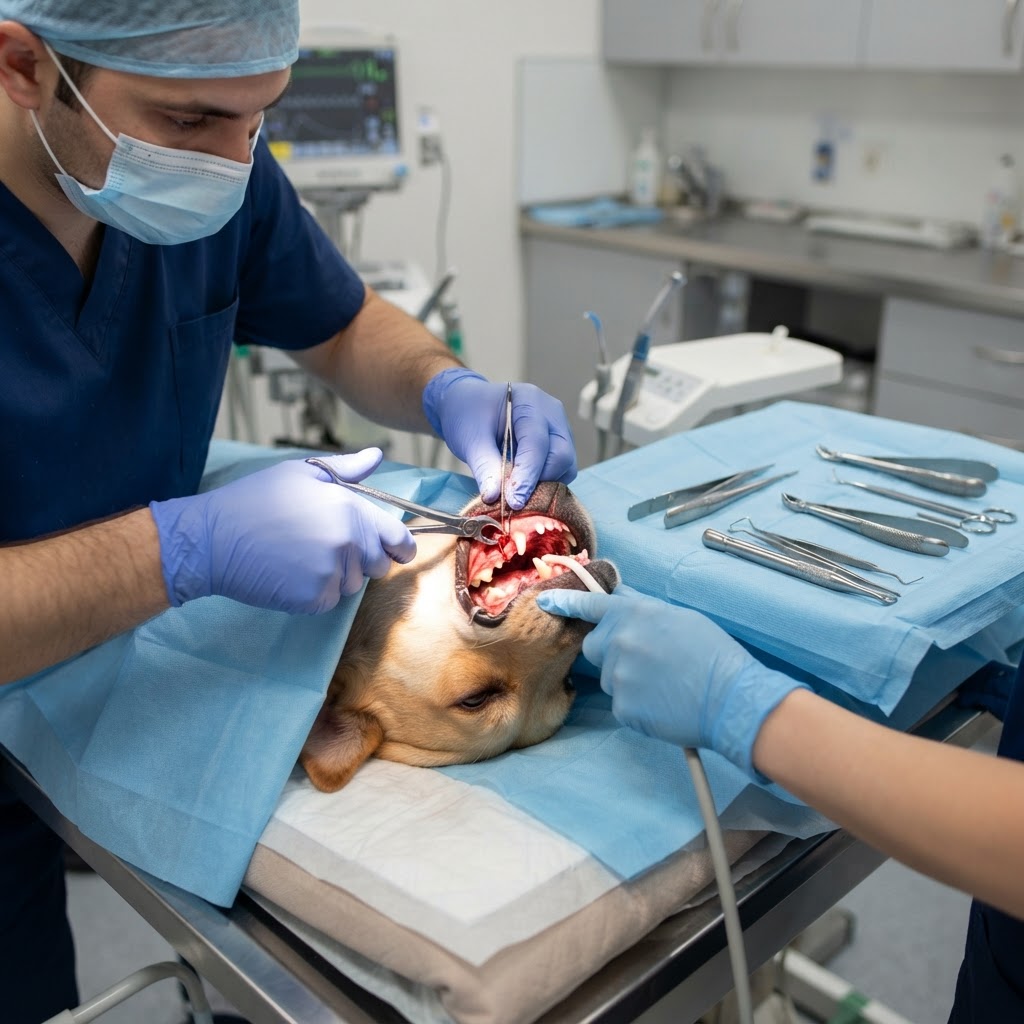
Oral tumors are relatively common in dogs, with 6% of all canine tumors occurring in the mouth. They range from benign growths that are easily removed to aggressive cancers requiring extensive surgery. Early detection and treatment significantly improves outcomes — and reduces cost.
The average cost of dog oral tumor surgery is $1,500, with most owners paying between $500 and $3,000 depending on the tumor type, size, and location.
Dog Oral Tumor Surgery Cost by Tumor Type
| Tumor Type | Malignancy | Surgery Cost | Prognosis |
|---|---|---|---|
| Epulides ( Peripheral Odontogenic Tumor) | Benign | $500–$1,500 | Excellent — complete excision is curative |
| Oral papilloma (viral wart) | Benign | $200–$600 (or resolves on its own) | Excellent — often regresses without treatment |
| Fibroma / osteoma | Benign | $500–$1,500 | Excellent with complete removal |
| Melanoma (oral) | Malignant — aggressive | $1,000–$3,000 | Guarded — high metastasis rate; vaccine available |
| Squamous cell carcinoma | Malignant | $1,500–$3,000+ | Variable — depends on location and completeness of excision |
| Fibrosarcoma | Malignant | $1,500–$3,000+ | Moderate — locally invasive, lower metastasis rate |
| Osteosarcoma ( jaw) | Malignant — aggressive | $2,000–$5,000+ | Guarded — may require partial jaw removal |
What Affects the Cost of Oral Tumor Surgery?
- Tumor size: Small tumors (< 2cm) are quick to remove. Large tumors require more extensive surgery.
- Location: Tumors on the gums or lip are easier to access. Tumors on the palate or jaw bone require more invasive surgery.
- Bone involvement: If the tumor has invaded the jaw bone, partial mandibulectomy (lower jaw) or maxillectomy (upper jaw) is needed — costs $2,000–$5,000+.
- Margin width: Malignant tumors require 1–2cm margins of normal tissue, making the surgery more extensive.
- Histopathology: $120–$350 — always recommended to confirm diagnosis and grade the tumor.
- Dental X-rays / CT scan: $150–$1,500 — assesses bone involvement and tumor extent.
- Board-certified surgeon: Complex oral tumor removal should be done by a board-certified veterinary dentist or surgeon. General practice vets may handle simple, benign tumors.
Cost Breakdown
| Component | Cost | Required? |
|---|---|---|
| Oral exam + biopsy (if needed) | $150–$500 | Yes — confirms tumor type |
| Dental X-rays or CT scan | $150–$1,500 | Yes — assesses extent and bone involvement |
| Pre-anesthetic blood work | $80–$200 | Yes |
| Anesthesia + monitoring | $150–$400 | Yes |
| Tumor excision surgery | $500–$3,000 | Yes — varies by tumor type/size |
| Histopathology (lab analysis) | $120–$350 | Yes — confirms diagnosis and margins |
| Overnight hospitalization | $200–$500/night | 1–2 nights for extensive surgery |
| Take-home pain medication + antibiotics | $40–$100 | Yes |
| Follow-up visit + X-rays | $150–$350 | Yes — at 2–4 weeks to check healing |
Cost by Clinic Type
| Clinic Type | Benign Tumor | Malignant Tumor |
|---|---|---|
| General practice vet | $500–$1,500 | Usually referred to specialist |
| Board-certified veterinary dentist | $800–$2,000 | $1,500–$4,000 |
| Board-certified surgeon (oncology) | $1,000–$2,500 | $2,000–$5,000+ |
| Teaching hospital | $500–$1,500 | $1,000–$3,500 |
Signs of Oral Tumors in Dogs
- Visible mass or growth in the mouth
- Bleeding from the mouth
- Bad breath (worse than normal dog breath)
- Difficulty eating or dropping food
- Pawing at the mouth
- Facial swelling or asymmetry
- Loose teeth (not from periodontal disease)
- Excessive drooling
- Reluctance to open the mouth
If you see any of these signs, have your dog examined immediately. Oral tumors can grow quickly, and early removal is both cheaper and more effective.
Frequently Asked Questions
How much does it cost to remove an oral tumor from a dog?
Dog oral tumor surgery costs $500 to $3,000 depending on the tumor type. Benign tumors (epulides, papillomas) cost $500–$1,500. Malignant tumors (melanoma, squamous cell carcinoma) cost $1,500–$3,000+. Tumors requiring jaw bone removal cost $2,000–$5,000+. Histopathology adds $120–$350.
Are oral tumors in dogs always cancerous?
No. About 60% of oral tumors in dogs are benign (epulides, papillomas, fibromas). The remaining 40% are malignant — melanoma, squamous cell carcinoma, fibrosarcoma, and osteosarcoma are the most common malignant types. A biopsy or histopathology is needed to determine the tumor type.
Does pet insurance cover oral tumor surgery?
Yes, most pet insurance covers oral tumor surgery including diagnostics, surgery, histopathology, and follow-up care. Re-reimbursement is typically 70–90% after your deductible. The melanoma vaccine (for oral melanoma) may also be covered.
What is the survival rate for dogs with oral tumors?
It depends on the tumor type. Benign tumors: excellent prognosis with complete removal. Oral melanoma: guarded — median survival 6–18 months with surgery alone, improved with the melanoma vaccine. Squamous cell carcinoma: 50–80% survival at 1 year with complete excision. Fibrosarcoma: 40–70% at 1 year with wide excision.
Can oral tumors spread to other parts of the body?
Benign tumors do not spread. Malignant tumors can metastasize — oral melanoma has the highest metastasis rate (60–80% to lymph nodes and lungs). Squamous cell carcinoma has moderate metastasis (20–35%). Fibrosarcoma has low metastasis (10–20%) but is locally invasive. Chest X-rays or CT should be done before surgery to check for spread.