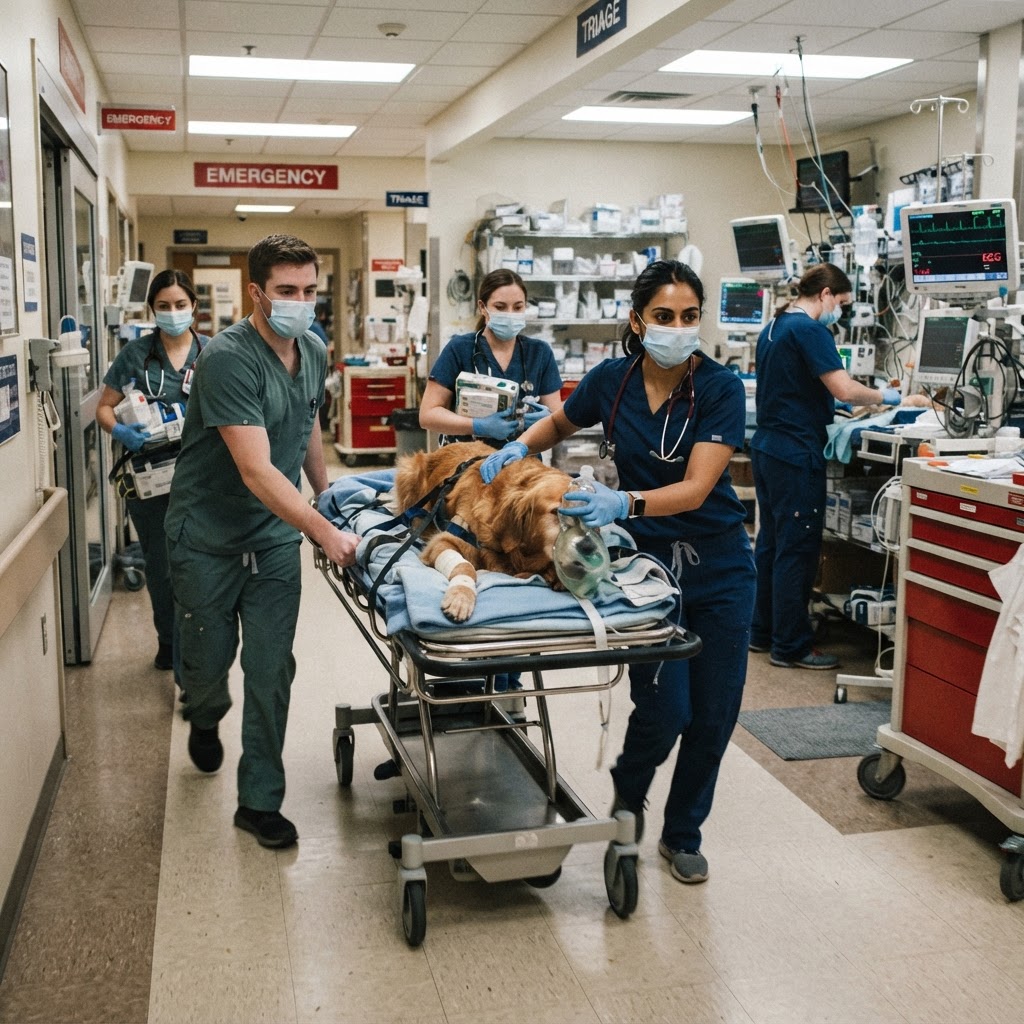
The dog emergency room (ER) is the 24/7 critical care facility for life-threatening emergencies. When your dog is in crisis — trauma, toxins, bloat, collapse — the ER is where you go. ER visits are the most expensive type of veterinary care because they combine emergency staffing, advanced equipment, and urgent treatment.
The average cost of a dog ER visit is $1,500, with most owners paying between $300 and $8,000+ depending on the severity of the emergency.
Cost by Emergency Severity
| Severity Level | Cost Range | Average | Examples |
|---|---|---|---|
| Level 1 — Stable, non-critical | $300–$800 | $500 | Mild vomiting, minor wound, mild pain |
| Level 2 — Moderate, needs treatment | $500–$2,500 | $1,200 | Severe vomiting, suspected toxin, mild trauma |
| Level 3 — Critical, needs hospitalization | $2,000–$5,000 | $3,500 | Bloat, pyometra, fracture, severe dehydration |
| Level 4 — Life-threatening, ICU + surgery | $3,000–$8,000+ | $5,500 | GDV surgery, splenic rupture, severe trauma |
Cost Breakdown — Typical ER Visit
| Component | Cost |
|---|---|
| ER exam/triage fee | $100–$300 |
| Emergency stabilization (IV access, oxygen, fluids) | $200–$500 |
| Blood work (CBC + chemistry + electrolytes) | $150–$350 |
| X-rays (2 views) | $150–$500 |
| Ultrasound (FAST scan or full) | $200–$800 |
| IV fluids + medications | $100–$400 |
| ICU hospitalization (1–3 nights) | $400–$1,500 |
| Emergency surgery (if needed) | $1,500–$5,000+ |
| Blood transfusion (if needed) | $500–$1,500 |
| Take-home medications | $40–$100 |
| Follow-up visit | $50–$150 |
| Total (moderate ER visit) | $1,690–$4,600 |
Most Common Dog ER Emergencies
| Emergency | Cost | Signs |
|---|---|---|
| GDV / Bloat | $1,500–$7,500 | Swollen abdomen, unproductive retching, collapse |
| Toxin ingestion | $500–$3,000 | Vomiting, drooling, seizures, lethargy |
| Pyometra (unspayed females) | $1,000–$3,500 | Vaginal discharge, lethargy, increased drinking |
| Hit by car / trauma | $1,000–$5,000+ | Limping, wounds, shock, collapse |
| Splenic rupture / bleeding tumor | $3,000–$5,000+ | Sudden weakness, pale gums, swollen abdomen |
| Severe allergic reaction | $300–$1,500 | Facial swelling, hives, difficulty breathing |
| Gastric/intestinal foreign body | $1,500–$5,000 | Vomiting, abdominal pain, not eating |
| Seizures | $500–$2,500 | Uncontrolled shaking, loss of consciousness |
How to Prepare for ER Costs
- Pet insurance: $30–$60/month saves $3,000–$8,000 on a single ER visit. The best financial protection for emergencies.
- Emergency fund: Set aside $3,000–$5,000 for pet emergencies.
- CareCredit / Scratchpay: Veterinary financing — 6–12 months interest-free on qualifying amounts. Apply before you need it.
- Know your nearest ER: Save the address and phone of the nearest 24/7 emergency hospital.
- Know the signs: Recognizing emergencies early saves lives and money — early treatment is always cheaper.
Frequently Asked Questions
How much does a dog ER visit cost?
A dog ER visit costs $300 to $8,000+, with an average of $1,500 for a moderate emergency. The ER exam/triage fee alone is $100–$300. Level 1 (stable) visits cost $300–$800. Level 4 (life-threatening with surgery) costs $3,000–$8,000+. Total including diagnostics, treatment, ICU, and surgery can reach $5,000–$10,000+.
Does pet insurance cover ER visits?
Yes, most pet insurance covers ER visits including the exam, stabilization, diagnostics, treatment, ICU hospitalization, surgery, and blood transfusions. Reimbursement is 70–90% after your deductible. A $5,000 ER visit with 80% reimbursement saves $3,600.
What's the difference between urgent care and the ER?
Urgent care ($150–$1,000) handles non-life-threatening issues (ear infections, minor wounds) during extended hours. The ER ($300–$8,000+) is 24/7 with full ICU, surgical capability, and overnight monitoring for life-threatening emergencies. Go to the ER for breathing difficulty, seizures, toxins, bloat, trauma, or collapse.
What if I can't afford the ER visit?
Ask about payment plans, apply for CareCredit or Scratchpay, check if a teaching hospital is nearby (lower costs), contact RedRover or Magic Bullet Fund for financial assistance, and ask about charitable funds the hospital may have. Most ERs will stabilize your dog first and discuss options before proceeding with expensive treatment.