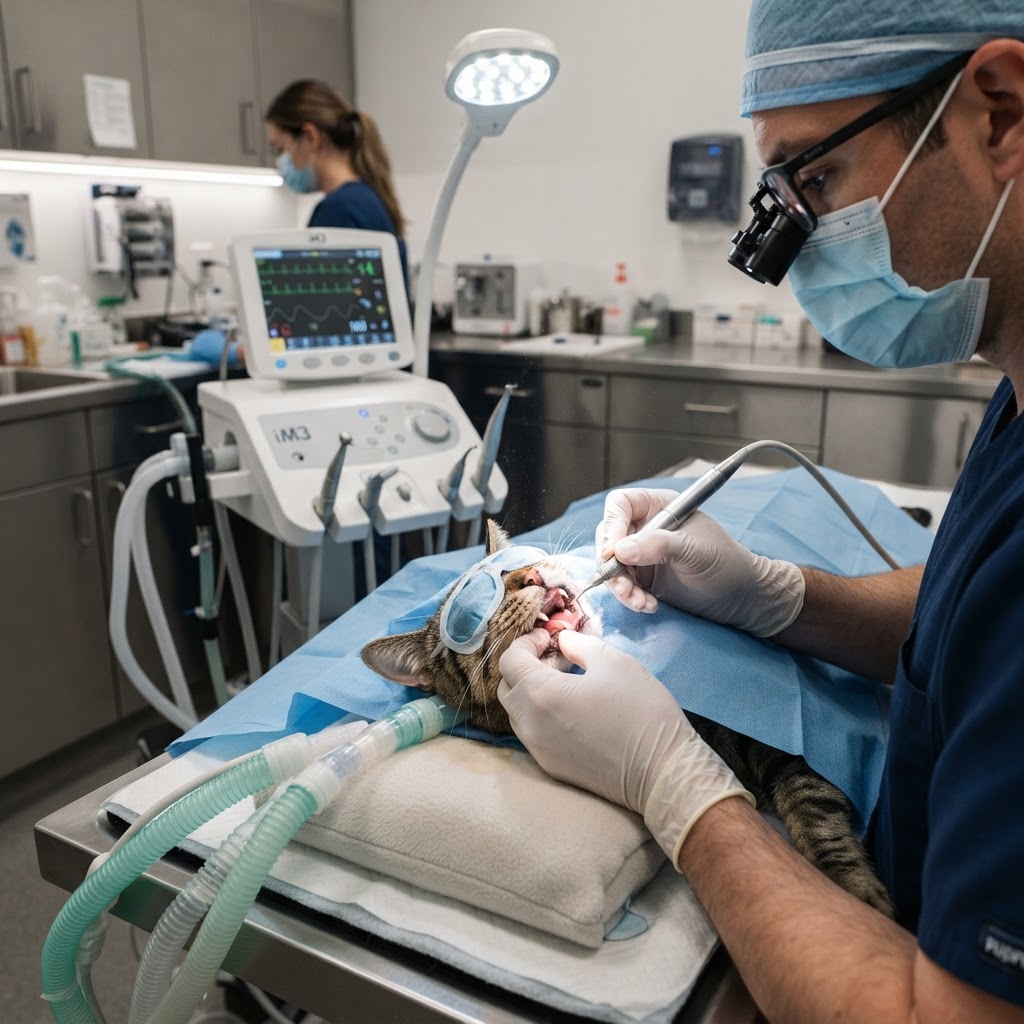
Cat dental surgery includes extractions, treatment for feline chronic gingivostomatitis (FCGS), oral tumor removal, and jaw surgery. Cats are prone to unique dental conditions like tooth resorption and stomatitis that often require surgical intervention beyond routine cleaning.
The average cost of cat dental surgery is $800, with most owners paying between $300 and $2,000 depending on the procedure.
Cat Dental Surgery Cost by Procedure
| Procedure | Cost Range | Average | When Needed |
|---|---|---|---|
| Single tooth extraction | $300–$800 | $500 | Fractured, infected, or resorbing tooth |
| Multiple extractions (4+ teeth) | $500–$1,500 | $900 | Advanced periodontal disease or resorption |
| Full mouth extraction (caudal teeth) | $1,000–$2,500 | $1,800 | Feline chronic gingivostomatitis (FCGS) |
| Full mouth extraction (all teeth) | $1,500–$3,000 | $2,200 | Severe stomatitis not resolved by partial extraction |
| Oral tumor removal | $500–$2,500 | $1,200 | Squamous cell carcinoma, fibroma, other oral masses |
| Jaw fracture repair | $1,000–$3,500 | $2,000 | Trauma, falls |
| Oronasal fistula repair | $500–$1,500 | $1,000 | Hole between mouth and nose (often after canine extraction) |
Feline Chronic Gingivostomatitis (FCGS) — The Most Expensive Cat Dental Condition
FCGS is a severe inflammatory condition where a cat's mouth is chronically painful and inflamed. The exact cause is unknown but involves an immune overreaction to plaque bacteria. Affected cats have red, ulcerated gums, drool excessively, struggle to eat, and lose weight.
Treatment pathway:
- Step 1: Thorough dental cleaning + extractions of diseased teeth ($500–$1,500). Many cats improve after removing diseased teeth.
- Step 2: Extraction of all caudal (back) teeth ($1,000–$2,500). If step 1 doesn't resolve the inflammation, removing all premolars and molars has a 60% success rate.
- Step 3: Full mouth extraction ($1,500–$3,000). If stomatitis persists, removing ALL teeth (including canines and incisors) resolves inflammation in 95% of cases.
- Step 4: Medical management ($50–$200/month). For the 5% who don't respond to full mouth extraction: cyclosporine, steroids, or interferon.
The total cost of treating stomatitis can range from $1,000 to $5,000+ over multiple procedures if a stepwise approach is used.
Cost by Clinic Type
| Clinic Type | Single Extraction | Full Mouth Extraction | Oral Tumor Removal |
|---|---|---|---|
| General practice vet | $300–$600 | $1,000–$2,500 | $500–$1,500 |
| Board-certified veterinary dentist | $500–$900 | $2,000–$3,500 | $1,000–$2,500 |
| Teaching hospital | $200–$500 | $800–$2,000 | $400–$1,200 |
Frequently Asked Questions
How much does cat dental surgery cost?
Cat dental surgery costs $300 to $2,000 on average. Single tooth extraction: $300–$800. Multiple extractions: $500–$1,500. Full mouth extraction for stomatitis: $1,000–$3,000. Oral tumor removal: $500–$2,500. The cost depends on the procedure, number of teeth involved, and clinic type.
What is stomatitis in cats and how is it treated?
Feline chronic gingivostomatitis (FCGS) is a severe immune-mediated inflammation of the mouth. The primary treatment is extracting diseased teeth, and if that fails, extracting all teeth. Full mouth extraction resolves inflammation in 95% of cases. Treatment costs range from $1,000 to $5,000+.
Does pet insurance cover cat dental surgery?
Yes, most pet insurance covers cat dental surgery for illness (resorption, stomatitis, fractures, tumors). Reimbursement is typically 70–90% after your deductible. Pre-existing dental disease diagnosed before enrollment may be excluded.
Can my cat eat after full mouth extraction?
Yes. Cats who have all teeth extracted adapt remarkably well. Most cats eat dry kibble within 2–3 weeks after surgery. The relief from chronic pain makes most cats eat MORE after recovery, not less. Many owners report their cats are like "kittens again" after painful teeth are removed.