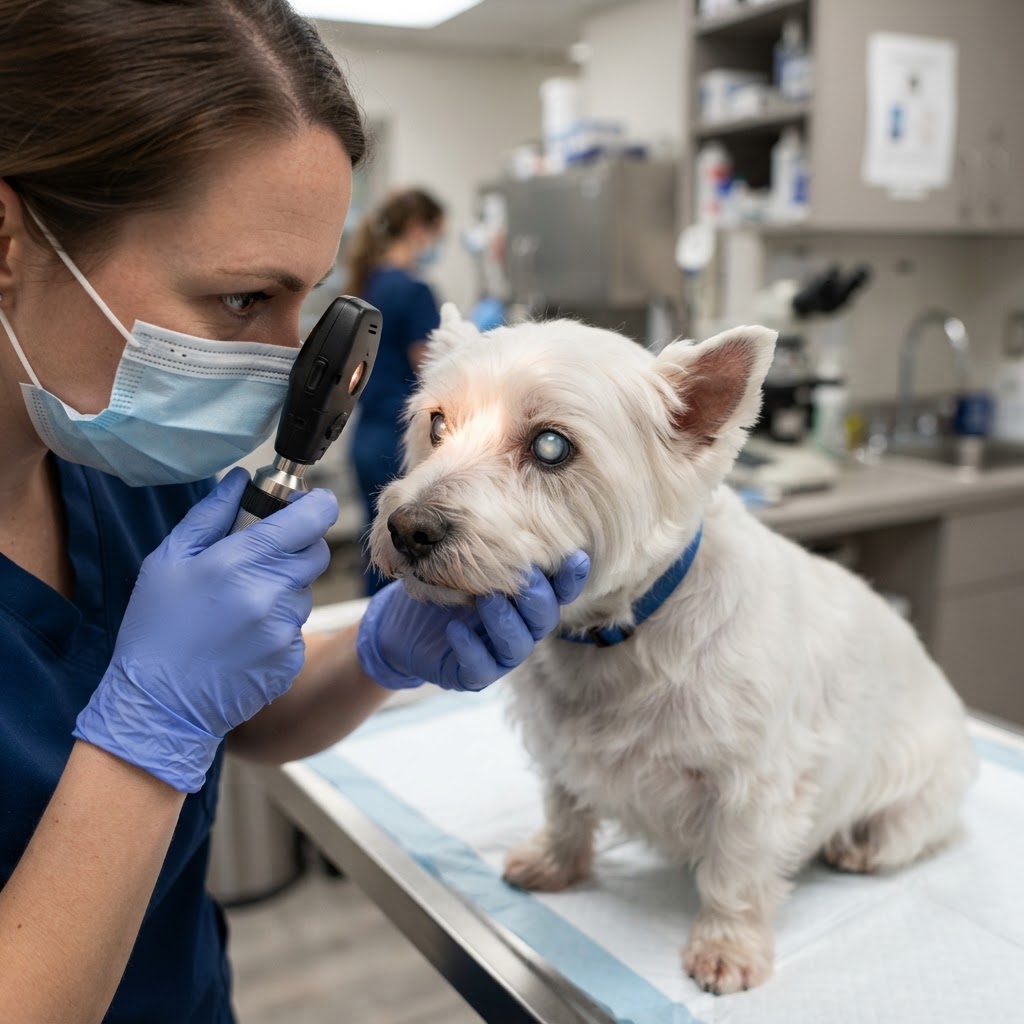
Cataracts cause the lens of the eye to become cloudy, leading to vision loss and eventually blindness. While cataracts are often associated with aging, dogs can develop them at any age — especially diabetic dogs, who have a 75% chance of developing cataracts within one year of diagnosis. Surgery is the only way to restore vision.
The average cost of dog cataract surgery is $4,000 per eye, with most owners paying between $2,800 and $6,845 per eye. Bilateral surgery (both eyes) typically costs $5,000 to $10,000.
How Much Does Dog Cataract Surgery Cost?
| Procedure | Cost Range | Average |
|---|---|---|
| Unilateral (one eye) cataract surgery | $2,800–$6,845 | $4,000 |
| Bilateral (both eyes) cataract surgery | $5,000–$10,000 | $7,000 |
| Intraocular lens implant (IOL) — included | Usually included | — |
| Phacoemulsification only (no lens implant) | $2,500–$5,000 | $3,500 |
What's Included in the Cost?
| Component | Cost | Required? |
|---|---|---|
| Pre-surgical exam with veterinary ophthalmologist | $150–$300 | Yes — confirms cataract and assesses retinal health |
| Pre-surgical blood work | $80–$200 | Yes |
| ERG (electroretinogram) — retinal function test | $150–$350 | Yes — confirms retina is healthy enough for surgery |
| Ocular ultrasound (if retina can't be seen) | $100–$250 | If cataract blocks view of retina |
| Cataract surgery (phacoemulsification + IOL) | $2,800–$6,845 | Yes — the surgery itself |
| Overnight hospitalization | $200–$500/night | 1–2 nights |
| Take-home medications (eye drops + oral) | $80–$200 | Yes — 4–6 different eye drops for 4–8 weeks |
| E-collar (cone) | $15–$40 | Yes — must wear for 2–3 weeks |
| Follow-up exams (3–5 visits over 8 weeks) | $100–$300 each | Yes — critical for monitoring healing |
| Total (one eye, everything included) | $3,800–$9,000 |
Why Is Cataract Surgery So Expensive?
Cataract surgery is one of the most complex procedures in veterinary medicine:
- •Board-certified veterinary ophthalmologist required: Only a specialist with advanced training in eye surgery should perform this procedure. There are fewer than 500 board-certified veterinary ophthalmologists in the US, which drives up costs.
- •Specialized equipment: Phacoemulsification machine (ultrasonic lens removal), operating microscope, and intraocular lenses — equipment costs $100,000+.
- •ERG test: Retinal function must be confirmed before surgery. If the retina is damaged, surgery won't restore vision. ($150–$350)
- •Microsurgery: The procedure is performed under an operating microscope at 10–25x magnification. The lens is only 7–9mm in diameter.
- •Intensive post-op care: 4–6 different eye drops administered 3–4 times daily for 4–8 weeks. Multiple follow-up visits. Strict activity restriction.
Cost by Clinic Type
| Clinic Type | One Eye | Both Eyes |
|---|---|---|
| Board-certified veterinary ophthalmologist | $3,000–$5,500 | $5,000–$8,500 |
| University teaching hospital | $2,800–$4,500 | $5,000–$7,500 |
| Specialty eye center (private practice) | $4,000–$6,845 | $6,500–$10,000 |
The Procedure — What Happens During Surgery?
- •Anesthesia: Dog is fully anesthetized with specialized monitoring.
- •Incision: A 3mm incision is made in the cornea.
- •Capsulotomy: A circular opening is made in the lens capsule.
- •Phacoemulsification: An ultrasonic probe fragments the cloudy lens and removes it through suction.
- •Lens implant (IOL): A foldable artificial lens is inserted into the empty lens capsule to restore focusing ability.
- •Closure: The incision may be closed with sutures or may self-seal.
- •Duration: 60–90 minutes per eye.
Cataract Surgery Recovery Timeline
| Timeframe | What to Expect | Care Required |
|---|---|---|
| Day 1–3 | Dog home with E-collar. Eye may be red and swollen. | 4–6 eye drops, 3–4x daily. Strict rest. No running, jumping, or pawing at eye. |
| Week 1 | First follow-up exam. Swelling decreasing. | Continue all eye drops. E-collar stays on 24/7. |
| Week 2–3 | Second follow-up. Vision improving. E-collar may come off. | Reduce some eye drops. Still restrict activity. |
| Week 4–6 | Third follow-up. Most inflammation resolved. | Taper eye drops. Gradual return to normal activity. |
| Week 8 | Final follow-up. Healing complete. | Most drops discontinued. Monitoring for complications. |
Can All Dogs Have Cataract Surgery?
Not every dog is a good candidate. The ophthalmologist will assess:
- •Retinal health: If the retina is detached or damaged (ERG test), surgery won't restore vision.
- •Lens-induced uveitis: If the cataract has caused inflammation in the eye, this must be treated before surgery.
- •Diabetes control: Diabetic dogs must have stable blood sugar before surgery.
- •General health: Dogs must be healthy enough for general anesthesia.
- •Temperament: Dogs must tolerate eye drops and an E-collar for 8 weeks. Aggressive or highly anxious dogs may struggle.
Frequently Asked Questions
How much does dog cataract surgery cost?
Dog cataract surgery costs $2,800 to $6,845 per eye, with an average of $4,000. Bilateral surgery (both eyes) costs $5,000–$10,000. The total cost including exams, ERG, blood work, surgery, medications, and follow-up visits is $3,800–$9,000 for one eye.
Does pet insurance cover cataract surgery?
Yes, most pet insurance covers cataract surgery if the cataracts developed after enrollment (not pre-existing). Diabetic cataracts are typically covered if the diabetes was diagnosed after the policy started. Reimbursement is 70–90% after your deductible.
What happens if I don't treat my dog's cataracts?
Untreated cataracts progress to complete blindness. They can also cause lens-induced uveitis (inflammation), glaucoma (increased eye pressure), and retinal detachment — all of which are painful and may require eye removal surgery. Diabetic dogs are at especially high risk of rapid cataract progression.
How long does cataract surgery take?
The surgery takes 60–90 minutes per eye. Your dog will be at the clinic for 4–8 hours including check-in, anesthesia, surgery, and initial recovery. Most dogs stay 1–2 nights for monitoring.
What is the success rate of dog cataract surgery?
The success rate is 90–95% for uncomplicated cases. Complications include glaucoma (5–10%), retinal detachment (2–5%), and infection (1–2%). Following post-op instructions carefully — especially administering all eye drops — significantly improves outcomes.
Will my dog need glasses after surgery?
No. The intraocular lens (IOL) implanted during surgery restores focusing ability. Dogs see well without glasses. Most dogs have functional vision within 1–2 weeks of surgery.